Winter sports events at high altitude impose serious demands on temporary structures: heavy snow accumulation, ridge-line wind gusts, and freezing temperatures that stiffen standard PVC covers. A clear span frame engineered for alpine conditions keeps the event operational while other venues remain closed. The column-free interior suits ski race staging areas, spectator warming zones, and equipment storage under one roof. For organizers running events at mountain venues, these clear span ice hockey and winter sport tents deliver reliable performance in cold environments.
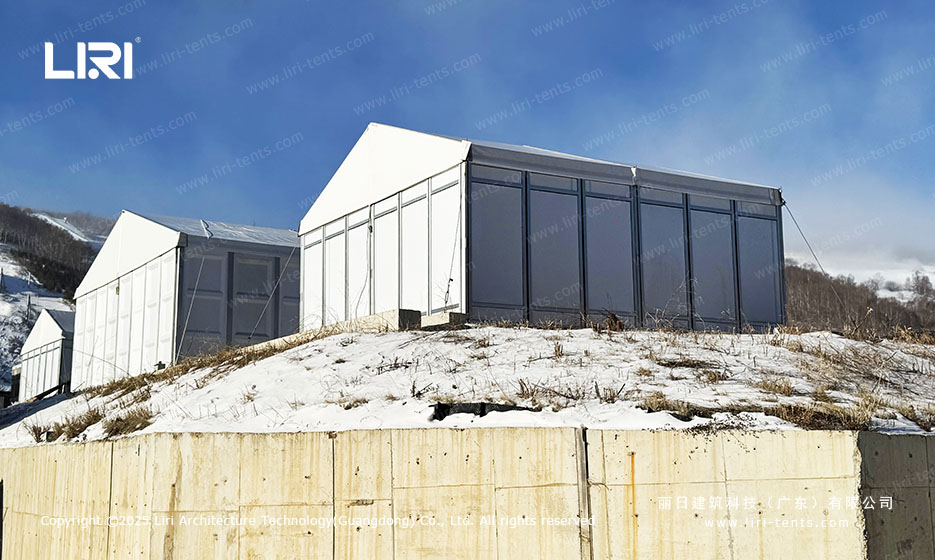
Snow Load Capacity and Wind Resistance Specifications
The 6061-T6 aluminum frame carries snow load options from 0.3 to 0.5 kN/m², with the sloped roof profile shedding accumulation rather than holding a flat layer. Wind resistance reaches 80 to 100 km/h when the frame is properly ballasted with weight plates on hard surfaces or stakes on packed snow. The PVC roof membrane at 650 to 850 g/m² remains flexible well below freezing, unlike standard covers that crack in cold conditions. Insulated and double-layer sidewall options retain interior heat significantly better than single-skin panels, reducing the heating load during extended cold-weather events. These specifications match the rigorous standards applied to clear span tents for extreme cold weather deployments.
Eave heights of 3m to 4m provide clearance for timing desks, warm-up areas, and overhead lighting truss. The frame requires no foundation — weight plates anchor the structure on packed snow or hard ground without excavation, leaving the alpine site undisturbed after teardown. Crews familiar with the 30m winter event tent method can erect the structure in one to two days even with limited daylight hours at high altitude. For timing and scoring needs, the 4m eave provides sufficient clearance for electronic display boards and photo-finish equipment commonly used at alpine ski competitions.
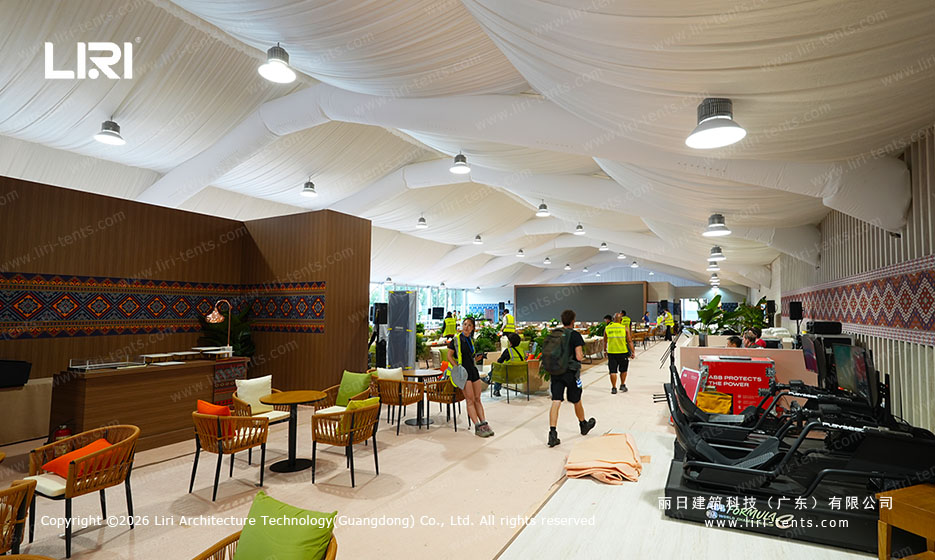
Interior Climate Control and Layout Options
Heating systems, lighting truss, and floor assemblies clip directly to the aluminum frame, keeping the interior functional through long cold days. Transparent sidewall panels bring natural daylight into the space while insulated sections retain warmth. The bay spacing of 3m or 5m allows flexible floor plans — a single bay can serve as a timing and scoring area while adjacent bays provide athlete warming space or equipment storage. The aluminum event tent for marathon races uses identical frame components, demonstrating the system versatility for endurance and winter sports alike. Power runs through overhead busbars or floor ducts, with generators placed outside to keep exhaust away from occupied areas. Drainage follows the natural site slope; no trenching is required for the temporary installation.
Wall sets include insulated panels that reduce heat loss compared to single-skin covers, and transparent sections maintain visibility of the outdoor course. Flooring options include beam-supported cassette systems that keep the interior dry above packed snow or thawing ground. Service doors for athlete and equipment access cut into the walls without extra frame reinforcement.
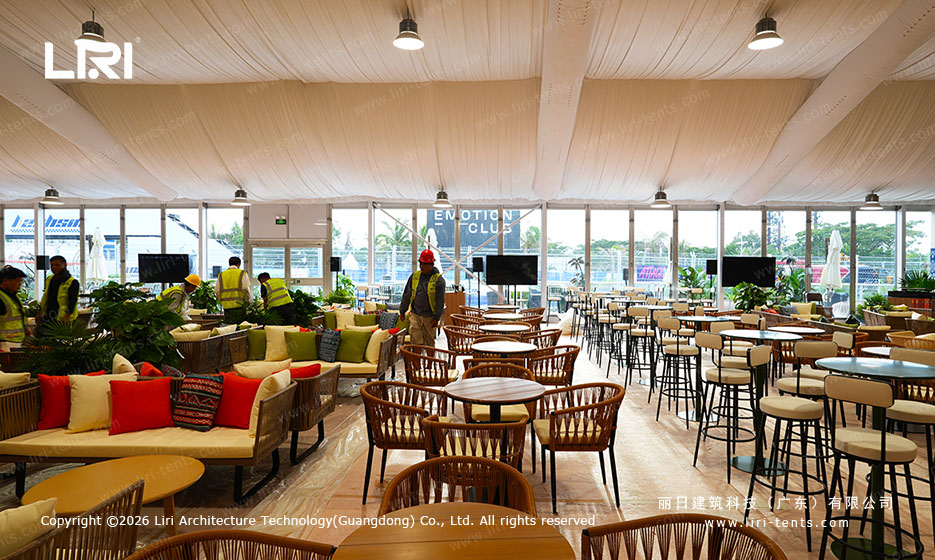
Comparison: Alpine Frame vs Standard Event Frame
The primary difference between the alpine-rated frame and a standard event frame lies in the roof pitch and cover specification. The alpine frame uses a steeper pitch to shed snow efficiently, while the standard frame relies on a flatter profile better suited for signage and exhibition layouts. Both frames share the same 6061-T6 aluminum alloy and connector system, meaning crews trained on one can build the other without additional instruction. For summer events at the same mountain venue, the frame can be re-skinned with standard roof covers, making it a year-round asset rather than a seasonal structure.
Getting started requires the venue team to provide altitude, expected snow load, and historical wind data. The supplier reviews these numbers and sets bay size, cover specification, and anchoring method accordingly. A site survey confirms ground or snow-pack conditions for plate anchoring and checks overhead clearance for the ridge. Delivery arrives as labeled frame, cover, and wall sets that a small crew handles without cranes. Ask about insulated walls and heating capacity early, as those components determine comfort levels more than the roof cover does.
Frequently Asked Questions
What snow load can the alpine tent withstand at high altitude?
The specified snow load reaches 0.3 to 0.5 kN/m² with appropriate cover material and roof pitch. The sloped design sheds accumulation naturally, preventing the weight from building up beyond the rated capacity during continuous snowfall. Event managers at alpine resorts should verify local snow load data against these specifications before the winter sports season begins.
Will the PVC cover crack in sub-zero winter sports conditions?
No. The 650 to 850 g/m² PVC membrane stays flexible well below freezing, and insulated sidewall options add thermal retention without requiring a secondary frame structure. The material meets DIN 4102 B1 flame retardancy standards even in cold conditions, a critical safety requirement for enclosed winter sports venues.
Can the tent be installed directly on packed snow at altitude?
Yes. Weight plates anchor the frame on compacted snow or frozen ground without excavation or concrete. The site returns to its natural state after teardown, leaving no trace of the temporary installation. This no-foundation approach is essential for environmentally sensitive alpine locations where ground disturbance is prohibited.
How quickly can the winter sports structure be removed between events?
A trained crew can dismantle the frame and pack covers into transport bundles within one day, even in sub-zero conditions. All components store flat for compact transport between mountain venues. Ski resorts running multiple events per season benefit from scheduling teardown between competition days.
What heating options work inside the alpine winter sports tent?
Clip-in HVAC units or forced-air heaters connect to the frame without structural modifications. Insulated wall panels reduce heat loss, and overhead busbars distribute power for multiple heating units across the interior. Proper heating planning ensures athlete comfort and equipment functionality during extended cold-weather competitions. Browse winter sports tent solutions for recommended heating specifications.
Send the site details, required size and operating season for a tailored specification.