A music festival marquee is a clear-span structure built around the crowd, the stage and the sound rig. It holds a standing crowd under a lighting truss and scales from one stage canopy to a linked village, so planning starts with headcount.
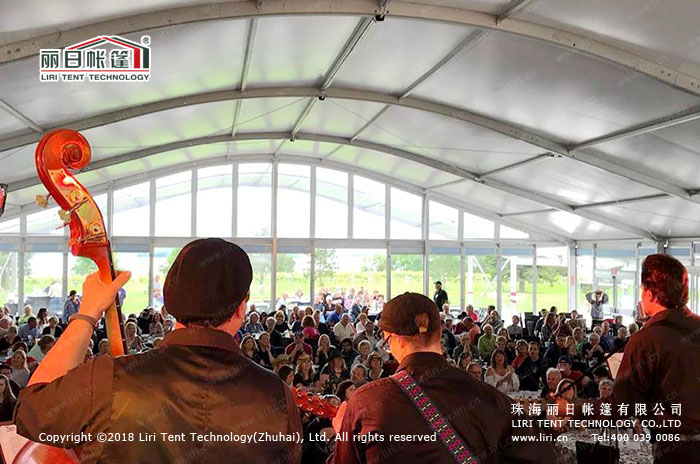
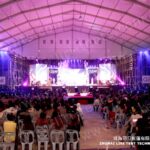
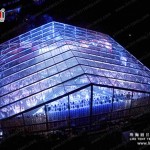
The first question is how big the tent should be. A standing crowd needs about 1 sqm per person; a seated area takes more. A 30m polygon structure for music festivals packs a few thousand, and polygon structures for music festivals scale by adding bays as sales climb. A high capacity festival tent of that size keeps the floor column-free.
How Big a Music Festival Marquee Do You Need?
Size follows the programme. Mark the stage footprint and walkways before you pick a span, then sit a stage at one end of a 20x70m movable concert tent structure.
Leave real margin. Crowds drift; the bar and medical point each want a bay, so plan 20 percent over your peak and check it against the site boundary.
Structuring the Stage, Sound and Sightlines
Stage height sets the eave. A low tent hides the act past row ten, so most builds lift the roof to clear a 1.2m stage plus the truss, and large festival performance tent layouts put the mix desk and delay towers inside the shell, which keeps sound controlled.
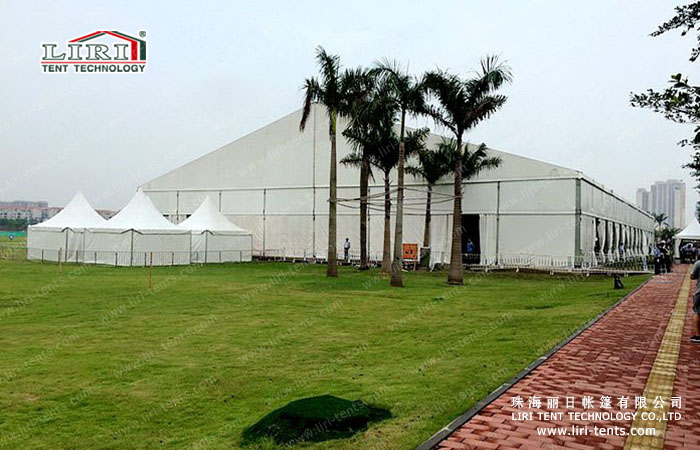
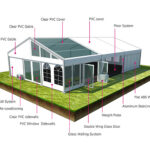
Sightlines decide where the legs go. A clear-span frame has no interior poles, so every seat sees the stage and line-array boxes hang from the purlins.
Ground, Anchoring and Weather for an Open Site
Most festivals run on grass, so grass decides the anchoring, and the supplier signs off ballast or steel stakes against local wind ratings.
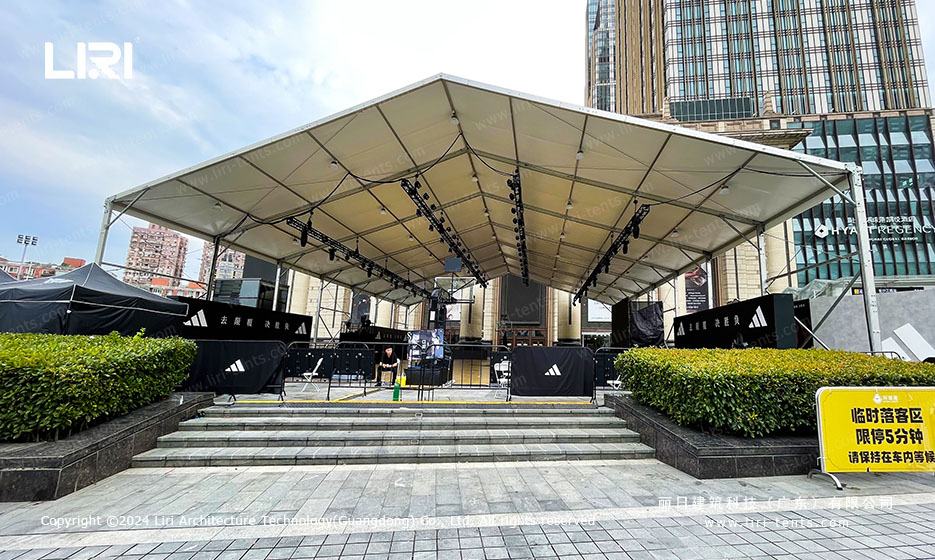
Weather is the other fixed cost. PVC roofs shed rain, but you still need drop sidewalls, a drained exit run and a wind plan with the licence holder. A movable concert tent structure that splits into bays is easier to re-secure mid-storm.
Scaling One Marquee Across the Day and the Site
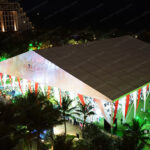
A festival is rarely one room. The same frame covers the main stage at noon and the after-show at midnight if the bays are modules, and catering tent setup for festivals shows how linked clear-span units share one service yard, one power run and one crew path.
Keep one frame type across the site. Crews learn it once and spares are shared, so the marquee reads as one brand. That is the quiet advantage of a music festival marquee built as a system.
Frequently Asked Questions
What does a music festival marquee cost to own versus hire for a single event?
Owning pays back after two or three annual uses and lets you brand the shell, while hiring suits a one-off date and shifts insurance to the supplier.
Does a festival marquee on a public field need both a structure permit and a noise licence?
Almost always: the structure permit covers the frame and anchoring, while the noise licence covers stage output and curfew, and the two are handled by separate offices.
What flooring keeps a festival marquee dry and safe in wet weather?
A cassette or plank floor over grass lifts the crowd off the mud and levels the stage, with a raised walkway to the exits to stop slip points.
Can one marquee frame serve the main stage and a smaller acoustic stage?
Yes, if both are modules of the same bay width: you erect the main shell first, then add the acoustic bay from shared spares with one crew and one anchor plan.