You have a field, a car park or a town square, and an event to run there. Before you choose a tent, it helps to know whether the site can actually take one. A large event tent needs more than an empty patch of ground. It needs a surface that stays firm, room around its edges, and a way for trucks and guests to arrive.
This guide walks through what to look at on your own site. It explains why each point matters on the day, and what to tell a supplier before you ask for a price. You do not need any building knowledge to use it. A few photographs and a rough measurement are enough to start.
The space around the tent matters as much as the tent
Most people begin by measuring the tent itself. That is a reasonable start, but it is only half of the story. A hall that is twenty metres wide also needs space beside it for people to queue, for boxes to be unloaded, and for a vehicle to turn. If those areas are missing, the event feels cramped even when the hall is big enough.
The most common type for a big public day is a clear span tent. That is a framed hall with no poles inside it, because the roof rests on the outer walls. The open floor is the reason organisers like it. You can put a stage, a court or long rows of stands anywhere you want.
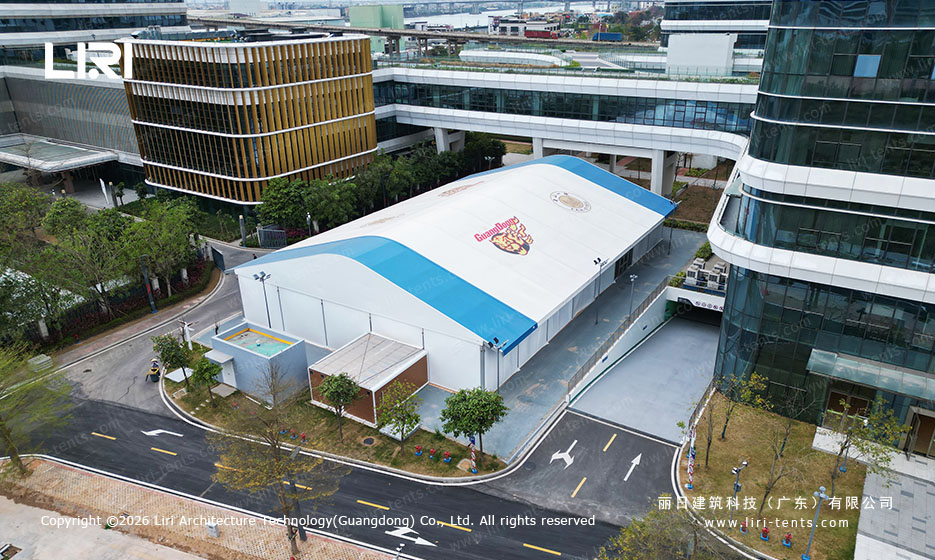
Stand in the middle of your site and picture the busiest hour. Guests arrive together, some stop to ask a question, and deliveries still need to reach the back. A photograph taken from that spot often shows a problem that a plan on paper hides. One wide lawn may be perfect, while the same lawn with a hedge across the middle is not.
Look at the edges too. Fences, walls, trees and parked cars all decide where the roof can end. A tent does not have to fill every free metre.
Leaving a clear strip along one side can make the whole day easier, because staff get a route that guests never need to cross. Guides to outdoor exhibition structures explain how the frame and the bays set the shape of the floor.
What the ground is made of
Grass, paving and bare soil behave differently under a tent. None of them is automatically wrong, but each one asks a different question. Grass is pleasant underfoot and looks good in photographs. After heavy rain it can turn soft, so a supplier may suggest a temporary floor to spread the load and keep guests dry.
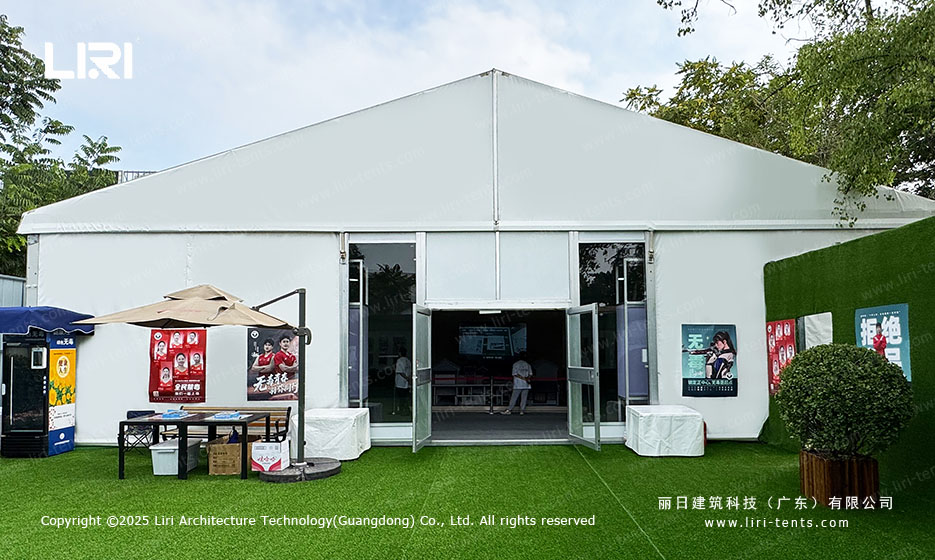
Paved ground is usually firm and level, which suits a large hall well. City squares and car parks are popular for exactly that reason. The question there is how the tent is held down.
Some surfaces cannot be drilled, and a supplier can use weights instead. Ask about this early rather than on the morning the truck arrives.
Level matters more than the material. A shallow slope can look harmless in a photograph and still leave one end of the floor noticeably higher than the other. Do not decide for yourself that it is fine. Send a picture taken along the ground, not just a view of the skyline, and let the person quoting look at it.
Water is worth a thought as well. Every site has a low corner where rain collects. Put the entrance away from it if you can.
A wet queue at the door is the sort of detail guests remember long after they forget the size of the hall. If your event runs through a wet month, mention that when you describe the site.
Getting people and vehicles onto the site
A tent arrives in pieces on a truck. That vehicle needs a route in, a place to stop and enough room to turn. A beautiful courtyard behind a narrow arch may be a wonderful party space and still be impossible to supply. Walk the route a lorry would take, including the last bend and any low branch above it.
Unloading takes space as well. Frames, wall panels and floors are laid out before they are lifted into place, so the crew need a clear working area beside the hall. On a small site this can be arranged in stages, but only if everyone knows about it beforehand. It is an ordinary question to ask, and a plain answer is a good sign.
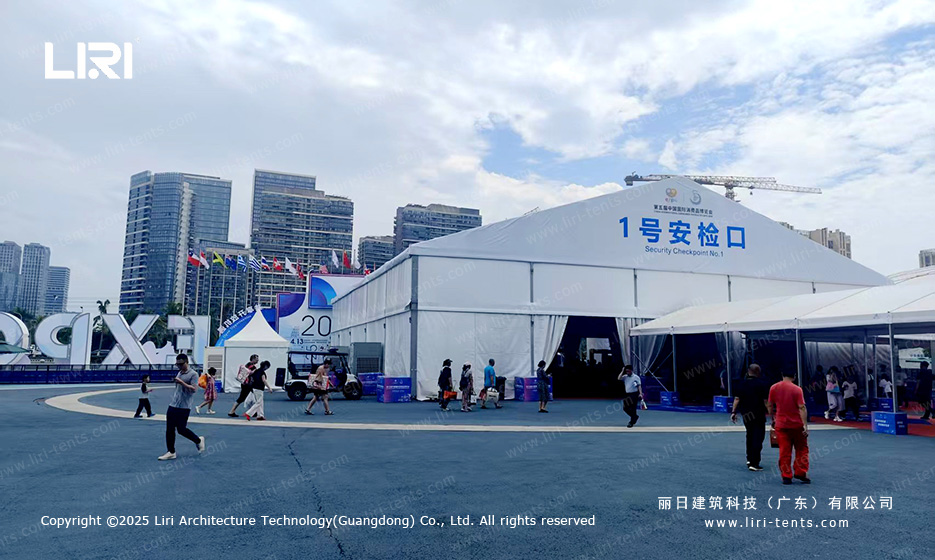
Guests need their own route. Think about where they park or leave a bus, and what they see when they turn the corner. If the entrance is hidden behind a row of parked cars, people will hesitate. Simple signs and an open view of the door solve more problems than extra staff at the gate.
Keep one route free for emergencies the whole time. It is easy to fill a useful gap with a delivery or a bin during a busy morning. Our guide to how visitors move through a hall describes how people choose a path inside a hall, and the same idea applies before they reach the door. The clearest route is the one they will use.
What is above and around the tent
Look up before you look down. A tent has height, and the tallest point is often in the middle of the roof. Trees, overhead cables, lamp posts and the edge of a nearby building can all limit where a hall may stand. A branch that seems high from the ground looks very different beside a tall tent frame.
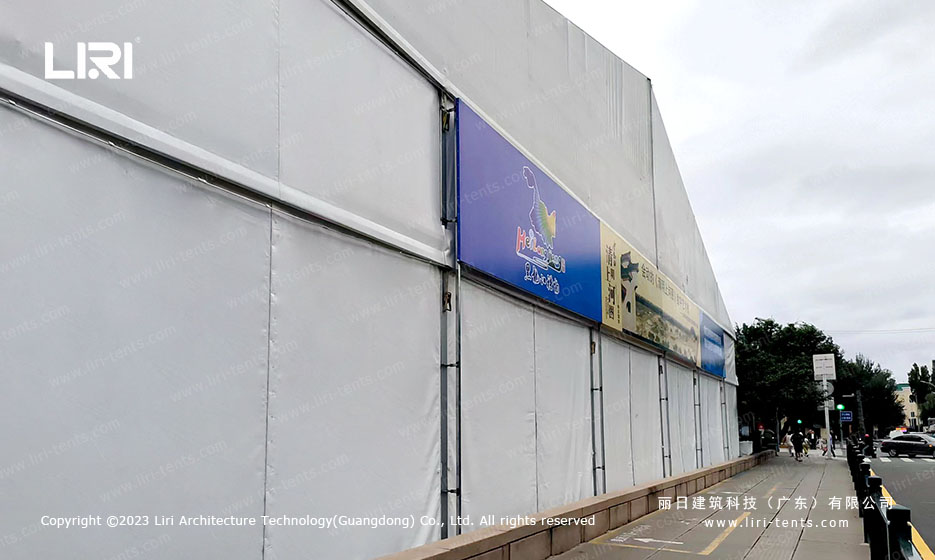
Nearby buildings change the feel of a site too. A wall along one side can shield guests from the wind, which is welcome on a cool evening. It can also cast a deep shadow across the entrance at the hour most people arrive.
Neither point is a reason to reject the site. Both are reasons to describe it accurately.
Neighbours deserve a thought in a town or on a campus. Music, deliveries and evening lighting travel further than people expect. If the site sits close to homes or offices, tell your supplier when the event starts and finishes. Choosing which way a stage faces, or where a generator stands, is much easier before the layout is fixed.
Wind is the last thing to notice. An open field and a sheltered courtyard of the same size do not behave alike on a breezy afternoon. You do not need to know any technical figures.
Just say whether the site is exposed, and ask how the tent will be secured. A supplier who explains that in plain words is easier to work with than one who hands you a table of numbers.
What to check before you agree on a size
Guest numbers are a useful starting point, but they should not decide the size on their own. Two hundred people seated for a dinner need a very different floor from two hundred people walking between exhibition stands. Write down what happens during the day, then let the site and the programme choose the hall together.
Measure the longest clear width and the longest clear length, and say what is at each end. A rough figure is fine at this stage. Add the surface type, the dates, and whether a truck can reach the edge. Four photographs, one from each direction, tell a supplier more than a long description written from memory.
If the space is an awkward shape, ask about a different layout. A long narrow strip may work better with a group of smaller tents than with one wide hall. We wrote about why some events use several tents instead of one in another guide. The same thinking applies to a site with a bend or a tree in the middle.
Flexible space often beats a perfect rectangle that does not fit. A hall squeezed against a hedge leaves no room for a queue or a delivery, however tidy the drawing looks.
Finally, ask when the crew can start and how long they need. A site used by a school, a hotel or a sports club may only be free at certain hours. Those hours are part of the decision, just like the size of the ground. Put them in your first message so the quote describes a plan that can really happen.
A good site is not simply the biggest flat area you can find. It is a place where the roof fits, the ground stays firm, a truck can reach the door, and guests understand where to go. Check those four things with a camera and a tape measure, and the right size usually becomes much easier to judge.
If you are looking at a piece of ground and wondering whether it will work, send us a photo of your site and your dates. A short description and a few pictures are enough for us to talk through the options with you.