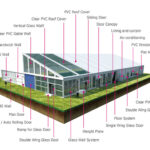
Church gathering tents are the clear-span structures a congregation puts up for a Sunday service, revival week or community outreach when the building is full or not available. The multi-use clear span event tent range shows how one frame serves worship one day and a meal or meeting the next.
At their core these are temporary halls: a column-free floor, one end left open for a stage and pulpit, and a shell built to carry sound, lighting and heating or cooling. You get a weatherproof room that seats dozens or thousands.
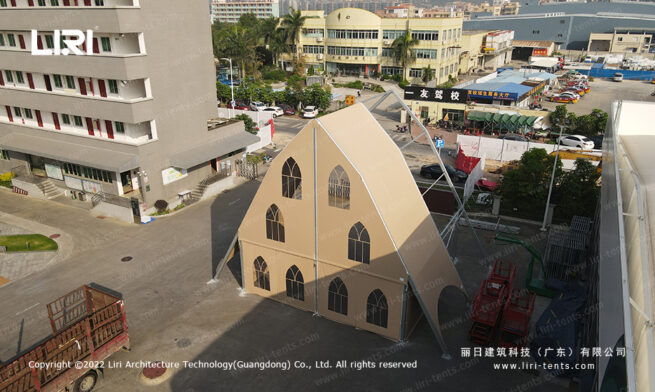
What church gathering tents actually give you
A clear-span frame means no poles across the floor, so every chair faces the front and the aisles stay clear for processions or communion. The outdoor conference event tent layout works the same way for a seated audience that needs to see and hear.
You also control the environment. Walls clip on for privacy and warmth, clear or glass panels bring in daylight, and a linened ceiling hides the frame so the space reads as a hall rather than a tent.
How to size a tent for your congregation
Size follows headcount. A weekly service for 60 to 100 fits a 6x12m or 10x15m clear-span, about 1.2 to 1.5 sqm per seated person. A revival or diocesan event scales to 20x40m modular bays you add as numbers firm up.
The commercial marquee for community events uses the same bay system, so a parish starts small and extends for the annual gathering without buying a second structure.
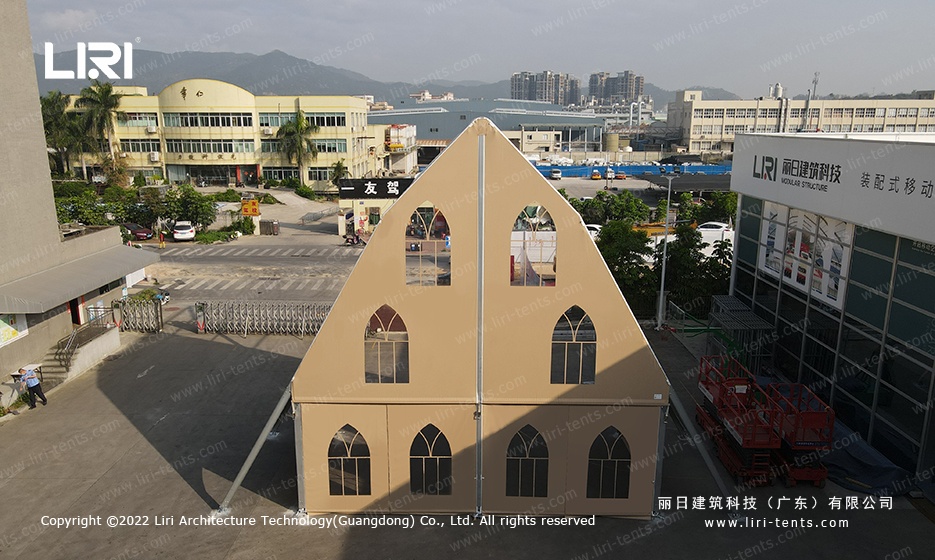
Layout: seating, a stage and clear sightlines
Plan the floor around the liturgy. Chairs or pews face a raised platform carrying the pulpit, a communion table and screens, while a side area holds the musicians and a creche. The open floor lets you rehearse the flow in an afternoon.
A versatile clear span tent also lets you divide the space with soft walls, keeping a quiet prayer corner apart from the noisy fellowship meal without leaving the structure.
Climate, light and sound for a full service
Heating or air conditioning keeps a packed service comfortable, and a lined roof cuts echo so the sermon carries. Stage lighting and a simple PA clip to the framework, with power run through a protected trench so cables stay out of the walkways.
For a more finished look the glass wall event tents for formal occasions turn the same frame into a bright, enclosed worship space.
Frequently Asked Questions
What does a church gathering tent cost to own?
Ownership runs well below a permanent hall extension, but the figure depends on span, wall finish and climate kit. Most parishes budget per bay and add modules over time rather than funding the whole build at once.
Do we need permission to erect one on church land?
Usually a planning note to the local authority plus a structural certificate for the frame. Grounds already owned by the parish are simpler, though a marquee left up beyond a set number of days can trigger a fuller application.
How long before a service should the tent go up?
A small 6x12m frame goes up a day ahead with a trained crew, while a 20x40m modular build needs two to three days including flooring, linings and AV. Book the crew a month ahead for peak seasons.
Can the tent stay up through winter?
Yes if specified for the load, with heating and a strengthened roof. Many churches run advent services in the same structure that hosted summer outreach, then store it dry.