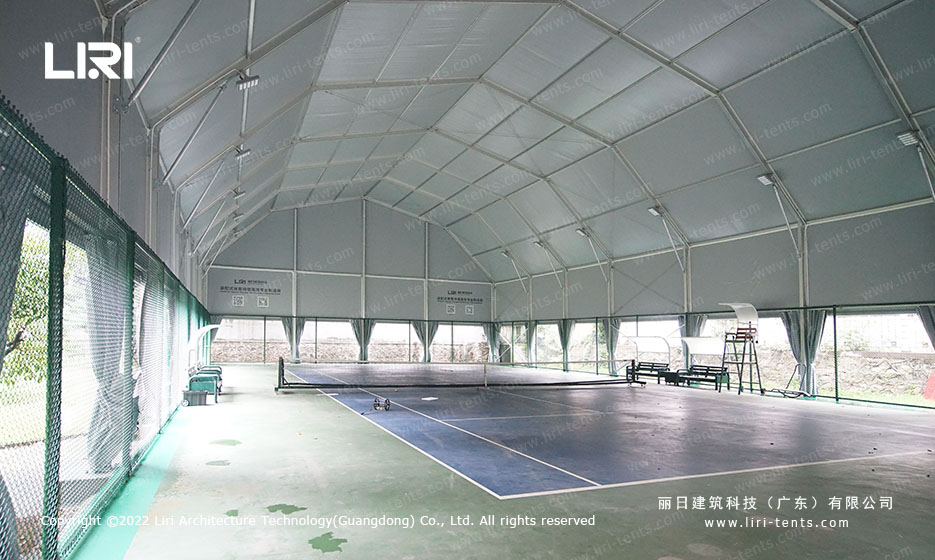
A sports event tent for sale serves a different purpose from a party shelter: it is a training and competition venue built to house courts, arenas, and spectator zones under a clear span roof. The same aluminum frame that covers a banquet can enclose a tennis court, a basketball court, a horse riding arena, or a swimming pool, with no interior columns blocking the play area.
Because the structure is built for repeated use and heavy traffic, the specification matters more than the looks. Frame profile, fabric weight, wind rating, and floor compatibility are the numbers that decide whether the tent performs season after season.
Where a Sports Event Tent Is Used
The applications run from professional training facilities to seasonal venues. Golf practice ranges, water sports bases, horse riding arenas, and multi-court sports halls all use these structures, and the flexible design allows the same tent to switch to weddings, exhibitions, and corporate functions during the off-season. That dual use is a strong reason clubs and facility managers invest rather than rent.
A sports hall event tent enclosure keeps play going through rain, wind, and heat, which extends the usable season and protects the surface investment. For tennis and basketball clubs, that extra capacity often pays for the structure within the first year of expanded programming.
Frame, Fabric and Wind Rating Specifications
The BT series frame uses a 204 x 102 x 4mm main profile with a 80 km/h wind load rating, and the structure is designed so that the required minimum tent length must be observed to reach that rating. The frame is hard-pressed extruded aluminum 6061/T6 with an anodized surface finish, and all connections are hot-dip galvanized steel.
The fabric is double PVC-coated polyester at 750 to 900 grams per square meter, waterproof, UV resistant, and fire retardant to NFPA701, CFM, and DIN4102 B1/M2 standards. Structural safety certificates from registered engineers in the U.S. and Australia back the design, and the frame carries a service life measured in decades with normal maintenance.
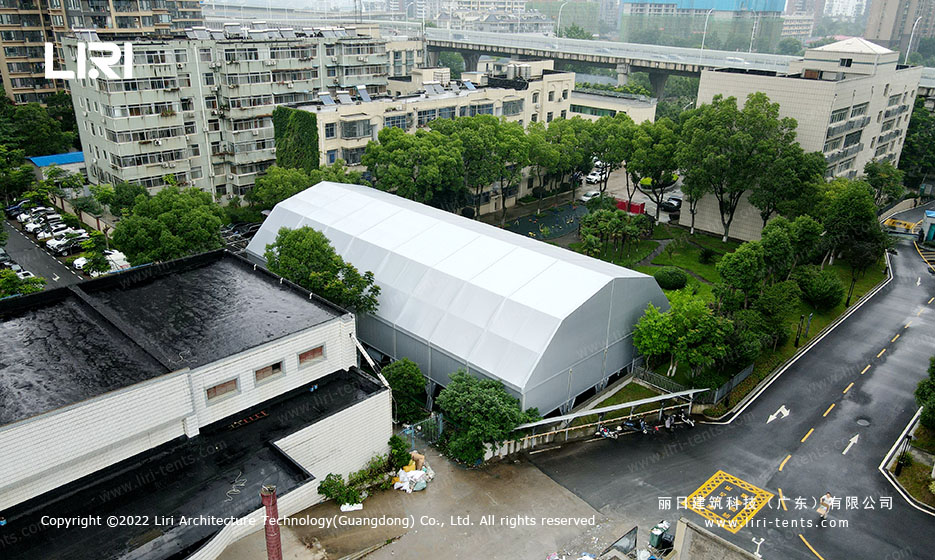
Accessories and Configuration
Optional equipment turns a basic hall into a competition venue. Ground anchors, anchor pullers, and weight plates secure the structure; glass doors, fire doors, glass walls, and ABS hard walls close in the sides; and clear PVC windows bring in daylight. Flooring systems, lining, ramps, and transport racks complete the package for professional use.
Color is part of the specification too. White, red, yellow, blue, green, black, grey, and transparent roof options are available, so a club can match the structure to its branding or keep it neutral for multi-purpose use. For specialist sports, models like a clear span tent for ice hockey rink or a 30m sports event tent for swimming pool cover are engineered around the sport’s own requirements.
Choosing Between Standard and Custom Layouts
Standard spans cover most training needs, while competition venues often order custom footprints. A large sports event tent for basketball game sized to full-court dimensions, or a large tennis court sports arena tent spanning multiple courts, requires a site survey and an engineered layout before production starts.
Facility managers comparing models should weigh bay distance against usable height. Models from BT10 up to BT21 and beyond raise the ridge height from about 5.5 meters to over 7 meters, which matters for high-ball sports and spectator sight lines. A aluminum clear span tent for sports event with a taller profile costs more per meter but serves competitive play better.
FAQ: Frequently Asked Questions
What wind rating does the sports event frame carry?
The BT series frame is rated to 80 km/h with proper anchoring, and the structure must be erected to the specified minimum tent length to reach that rating. For exposed sites, extra ballast and wind walls raise the effective resistance, so the final figure depends on the configuration chosen.
Can a sports tent be used for events other than sports?
Yes. The same clear span structure hosts weddings, parties, exhibitions, festivals, cafés, restaurants, and corporate events between sports seasons. Adding lining, glass walls, and flooring changes the atmosphere completely, which is why multi-purpose venues choose these tents over permanent buildings.
What floor surface works inside a sports event tent?
Sports flooring systems, temporary hard courts, and protective mats all install inside the clear span footprint. The frame sits on the ground with anchors or ballast, so the interior floor can be laid on the existing surface or on a raised sub-floor. Confirm the floor load rating with the supplier before installing heavy equipment.
What service life can owners expect from the frame and fabric?
With the anodized aluminum frame and fire-retardant PVC fabric, the structure typically serves 15 to 20 years in seasonal use. Fabric panels can be replaced individually as they age, and the frame itself holds its value, which makes the tent a depreciating asset rather than a consumable expense.
Send the site details, required size and operating season for a tailored specification.