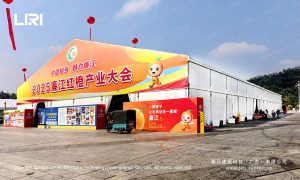
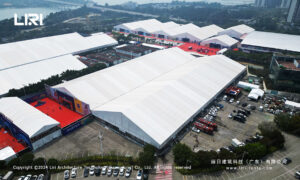
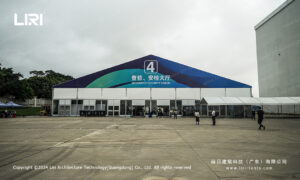
When a blockbuster cultural exhibition begins a multi-city tour, the venue is rarely a purpose-built museum.
Organizers instead look for temporary structures that can transform an empty urban plaza into a climate-controlled exhibition hall within days. For the Shenyang stop of the Qingming Riverside Scroll Exhibition, a touring showcase of the famous Song Dynasty painting reimagined as an immersive digital experience, a 20 by 40 m clear span exhibition tent delivered exactly that, becoming the welcome building, ticketing lobby, and climate-controlled entry corridor for visitors over the run.
Why traditional exhibition venues struggled with the Qingming tour
Touring cultural exhibitions rarely have the luxury of a permanent home. Conventional halls in any given city are booked months in advance, and municipal permits for new temporary outdoor exhibition structures in a central plaza can take far longer than the show itself.
For an exhibition scheduled to open within a few weeks, the organizer needed a structure that could be installed on a paved urban plaza without pouring concrete foundations, withstand strong seasonal winds, and still feel like a real cultural venue rather than a warehouse tarp.
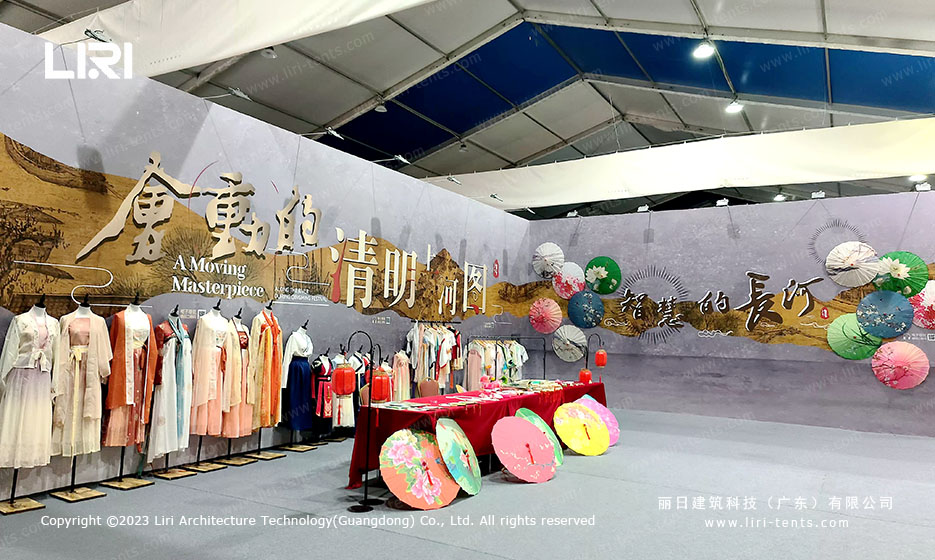
How clear span exhibition tents solved the touring venue problem
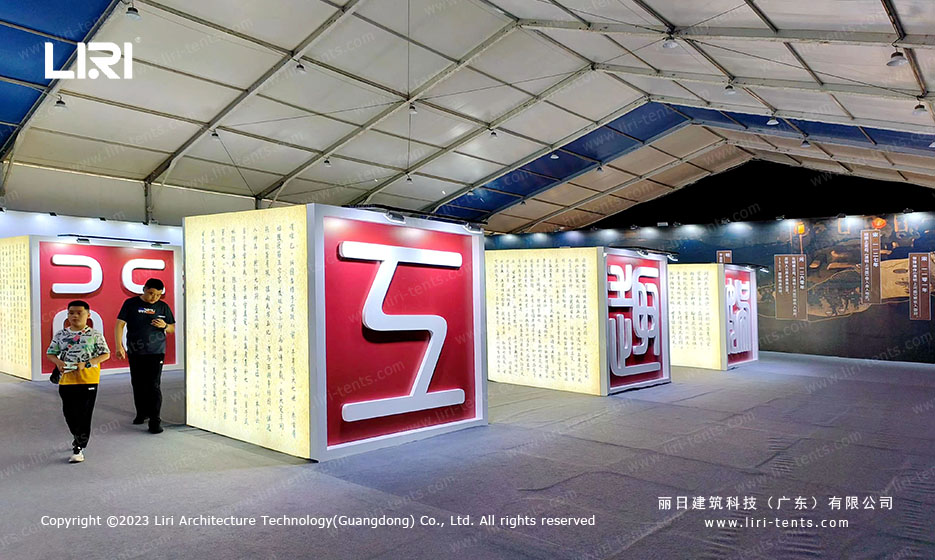
A clear span aluminum frame tent removes the two biggest obstacles to a fast urban install. Because the structure carries all loads through the perimeter columns, the interior stays free of internal poles, which means visitors walk into an unobstructed 800 square meter hall that can be themed, partitioned, and re-themed for each stop on the tour.
The frame uses hard-pressed extruded aluminum alloy profiles bolted to galvanized steel base plates, so the entire structure rests on surface-mounted weight plates rather than drilled anchors, a critical advantage on a finished plaza surface.
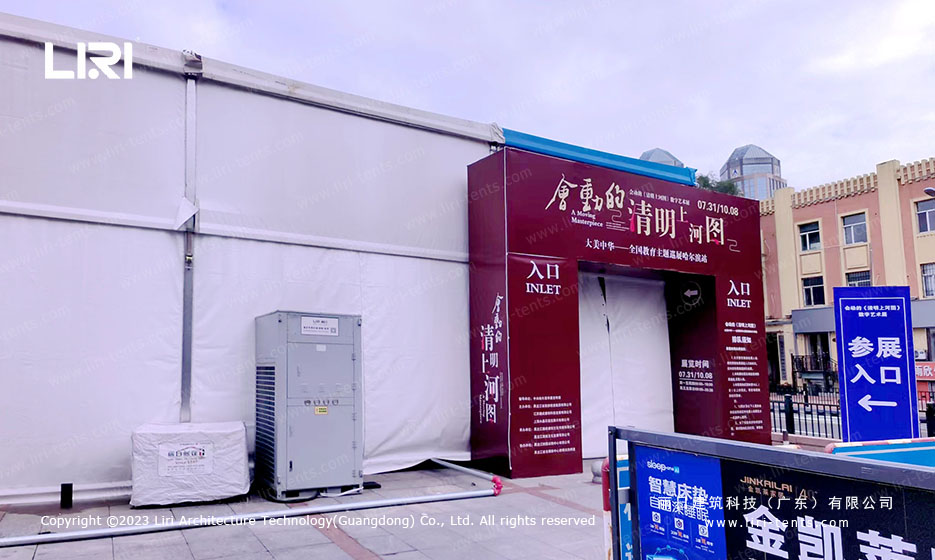
The second advantage is climate. Cultural artifacts and visitor comfort both demand stable indoor conditions. The tent was equipped with five concealed air handling units ducted through the fabric ceiling, paired with a chiller plant set 25 m from the hall on a service pad. Indoor temperatures stayed within a narrow band even when outdoor conditions swung sharply, which is why galleries increasingly specify clear span event tents for sensitive touring shows.
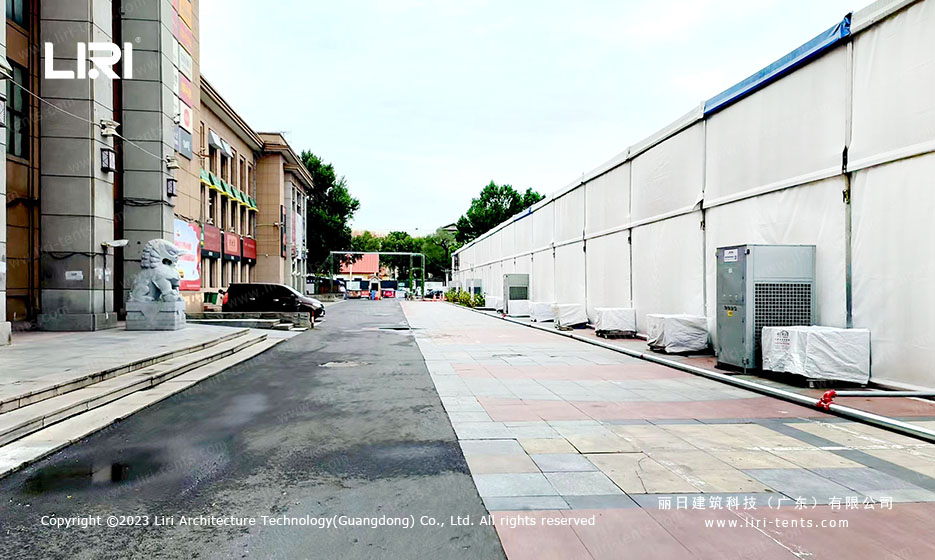
Structural and Engineering Specifications for the Shenyang Installation
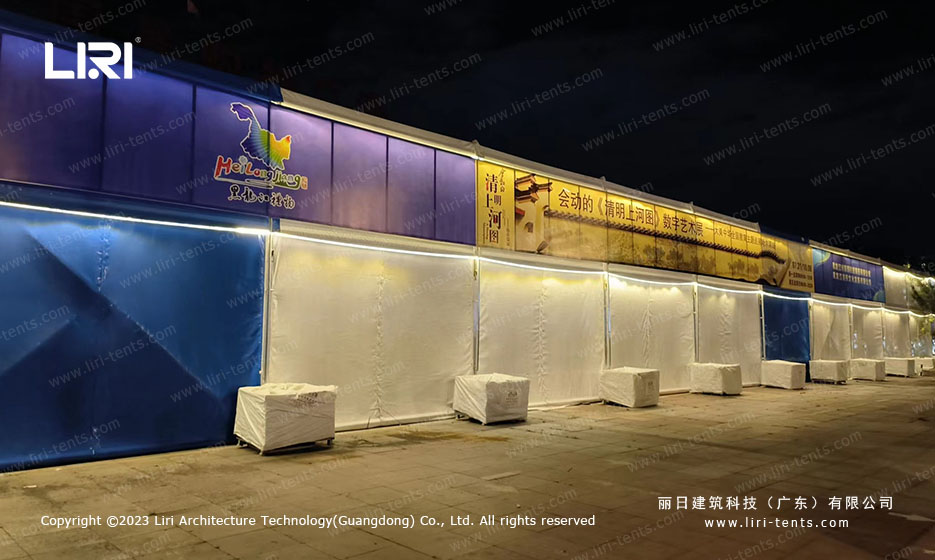
What makes clear span tents suitable for art exhibitions?
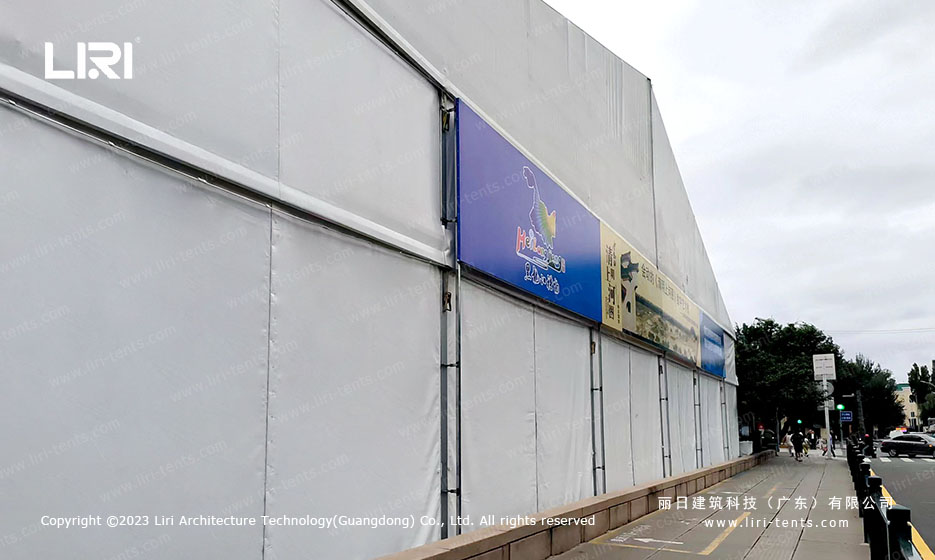
The fabric specification matters as much as the frame. For this installation, the roof used 850 gsm PVC coated polyester in opaque white to diffuse direct sunlight and protect projection screens inside, while the sidewalls combined white PVC for thermal buffering with a custom red branded entrance extension reading INLET in both Chinese and English.
The frame was engineered to a 100 km/h wind rating and 0.5 kN per square meter snow load, which covers the strongest seasonal storms in the region. For a winter tour stop, the same spec holds to minus thirty degrees with the heated HVAC package, which is why custom exhibition event tent configurations like this one are now specified by museums and cultural foundations.
How does modular design support a multi-city tour?
Modularity is what makes the tent economically viable for a tour. Every aluminum profile, fabric panel, and connector in the 20 by 40 m hall fits into standard shipping containers, and the entire structure can be disassembled, transported, and reinstalled at the next venue in roughly the same time it took to build originally. Components are tagged by bay and section so the crew works from a layout drawing rather than improvising.
For an exhibition visiting four or five cities, this reusability turns what would be five separate venue builds into one rolling infrastructure investment.
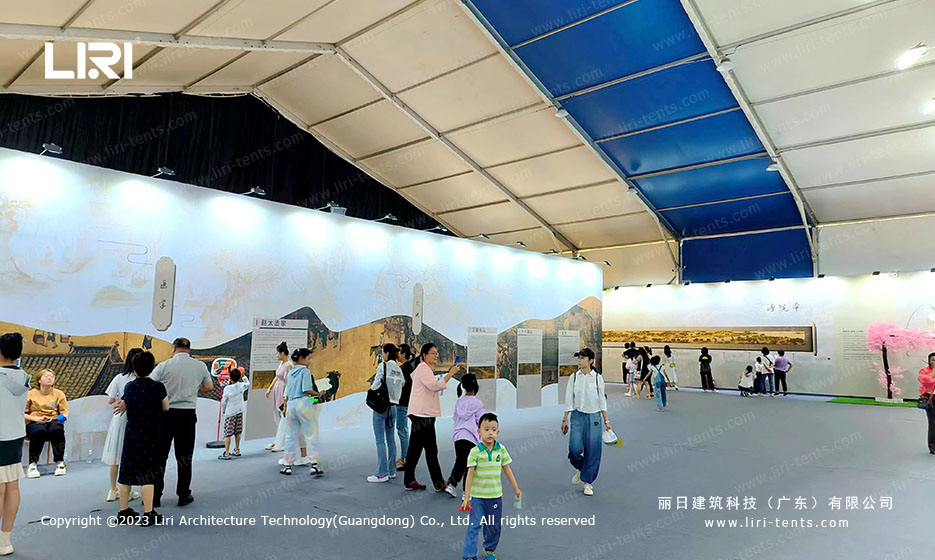
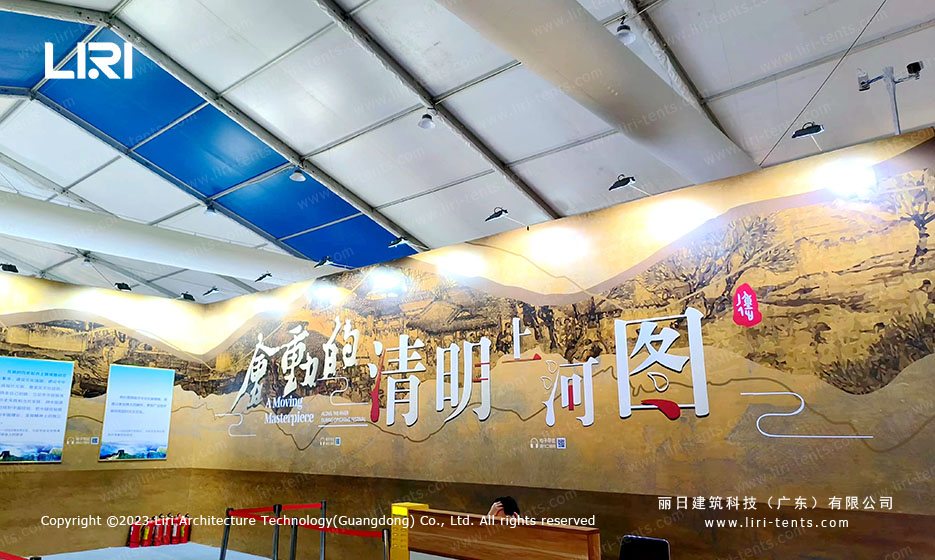
Inside, the hall was partitioned into a ticketing lobby, a security screening zone, a welcome gallery for the Qingming scroll reproductions, and a guided-entry corridor leading into the main immersive theater. Wayfinding signage in Chinese and English directed visitors from the plaza through the custom red INLET entrance into the lobby, then along a fabric-lined corridor past the ticketing desks and into the projection hall.
Partitions use the same modular frame, reconfigurable at each stop. This layout flexibility is exactly what modular exhibition tent solutions are designed to deliver.
Frequently asked questions
How cold can a clear span exhibition tent operate during a winter tour?
With the optional insulated roof liner, double-layer PVC sidewalls, and a heated HVAC package, the tent maintains comfortable indoor conditions down to minus thirty degrees Celsius outdoors. The Shenyang installation ran through the warmer part of the year, but the same engineering package has been used for ski season hospitality tents and ice sculpture exhibitions in colder regions.
Can the tent be rebranded for each tour stop with custom entrance signage?
Yes. The entrance extension shown at Shenyang was a custom fabric panel printed with the exhibition title and INLET marking in both languages. For the next stop on the tour, the same aluminum sub-frame accepts a replacement printed panel, so the welcome face of the venue changes while the structural shell stays identical. This is standard practice for trade fair and exhibition tent installations across touring shows.
What is the typical install time for a 20 by 40 m exhibition tent in a city plaza?
A crew of eight experienced installers typically completes the frame, fabric, and HVAC rough-in within five to seven working days on a prepared plaza surface, with another two days for the branded entrance extension and interior fit-out. Disassembly at the end of the run takes about three days, after which the entire package ships in two forty-foot containers to the next venue.
For organizers planning a touring cultural exhibition, a major product launch, or a recurring trade fair presence, the Shenyang Qingming Scroll installation shows what a modern clear span exhibition tent can deliver: a real venue, not a tent, that travels with the show.
The same factory can specify a structure to match any climate, branding, and capacity requirement, with engineering certification included for municipal permit applications.
Send the site details, required size and operating season for a tailored specification.