Political rally tents are clear-span structures adapted into an open-air gathering venue. A column-free floor holds the crowd, a raised stage or speaker platform sits at one end, and built-in sound and lighting keep the event moving safely.
What Political Rally Tents Need to Do First
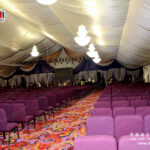
The first job is holding a crowd that can all see and hear one speaker. A clear-span frame removes interior poles, so every seat keeps an unbroken line of sight to the front.
The stage leads because everything else lines up to it. A raised platform gives the speaker height and the open floor becomes standing or seated space. A large event tent for music festivals follows the same logic, fixing the performance area before the crowd plan.
Sizing Political Rally Tents to the Crowd
Capacity drives the footprint. A 20x40m clear-span hall covers roughly 800 sqm of open floor, enough for several hundred standing attendees with room left for the stage and access lanes. Larger rallies add bays, since the frame grows in standard modules.
Plan the floor around people, not just the headcount. Leave room for wheelchair access, a press area and a stage buffer, then the rest sets capacity. A large clear span tent for assemblies shows how a 30x40m shell holds a thousand when the layout is drawn first.
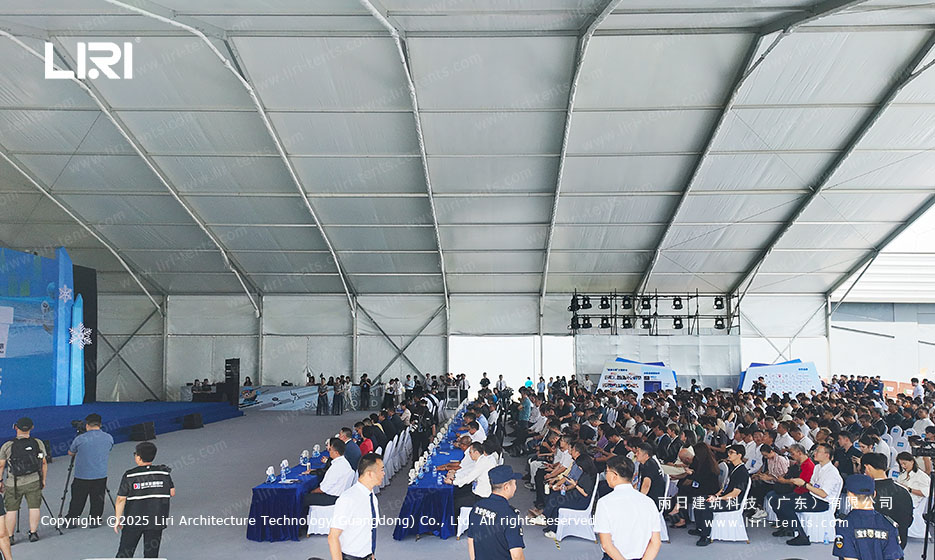
Stage, Sound and Lighting Built Into the Shell
A rally lives or dies on being heard. The structure carries the speaker system and a rigging line at the ridge holds banners or screens above the crowd.
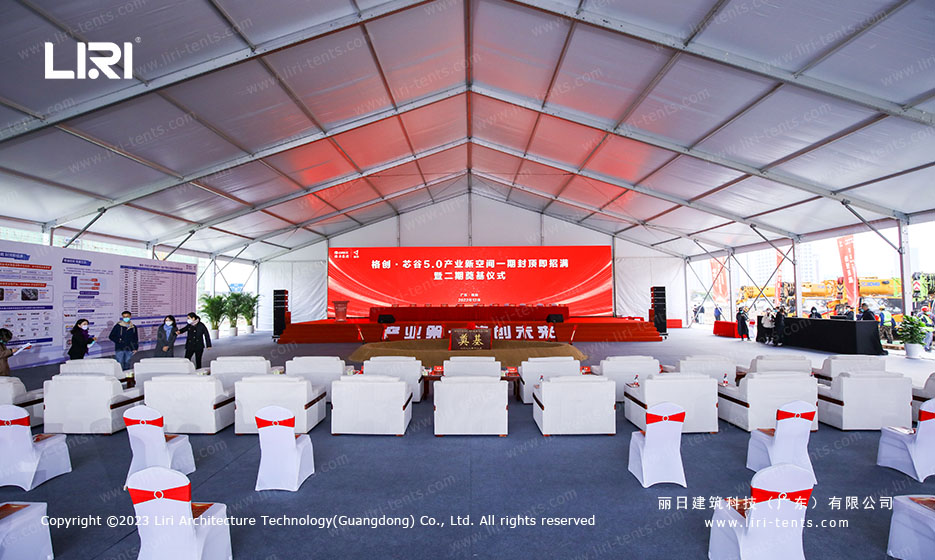
Lighting does double duty: it keeps the speaker visible after dark and lights the entry lanes for safety. An outdoor conference event tent uses the same built-in approach, with AV and power planned as part of the structure instead of bolted on later.
Crowd Flow, Access and Weather Cover
People must get in, gather and leave without a bottleneck. Wide openings at opposite ends create a one-way flow. A large church event tent in Pakistan held a thousand attendees through the same entry-and-flow plan, proving the layout scales before the decoration does.
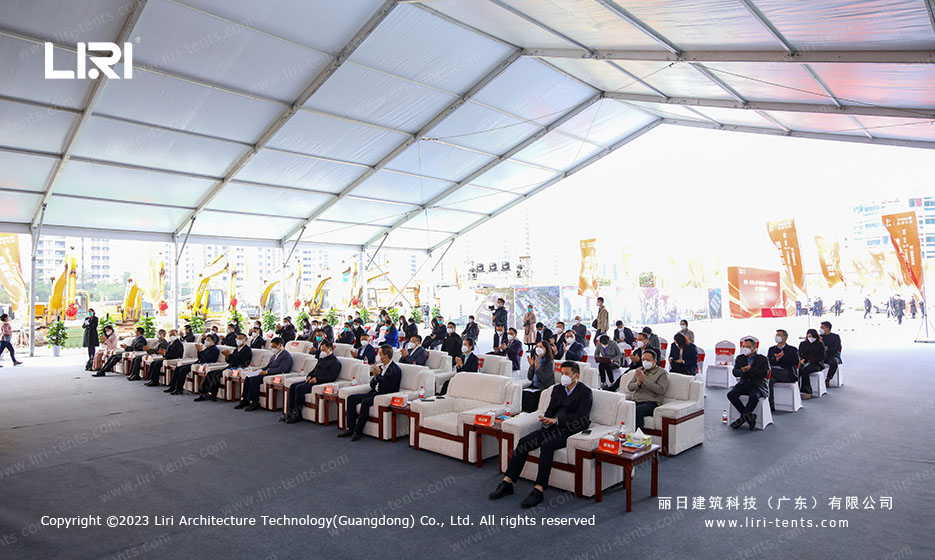
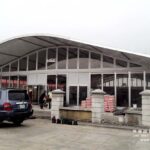
Weather is the other constant. A PVC roof keeps rain off the crowd and the sound desk, while sidewalls cut wind that would otherwise drown the speakers. A corporate event tents for planned gatherings faces the same wind and rain maths, and the answer is the same: close the shell where the weather hits.
Frequently Asked Questions
How much does a rally tent structure cost to own?
Ownership cost tracks span width, bay count and finish level rather than headcount. A basic PVC shell costs less than a fully lined structure with glass walls and rigging, so fixing the size and features first gives a usable figure.
What permits apply to a temporary structure for a public rally?
Public assemblies usually need a temporary structure permit plus a crowd-safety plan from the local authority. Requirements vary by site and attendance, so the organiser confirms them early.
How many days before the rally should the structure be built?
Allow setup days, not hours. Ground marking, delivery and the frame raise take longer than the event itself, so most teams book the build for at least two days before doors open.
Can the same structure handle wind and rain on the day?
A rated PVC roof and properly anchored frame shrug off normal event-day weather, while sidewalls cut the wind that would drown the sound. Extreme forecasts still need a call from the organiser, because no temporary shell beats a severe-storm warning.