Modular exhibition tent systems treat the venue as a set of building blocks: standardized bays, shared connection hardware, and repeatable assembly procedures. The event organizer specifies the required footprint, and the system fills that space precisely, then breaks down into flat storage for the next event. For brands that exhibit at multiple trade shows throughout the year, a modular tent kit delivers lower per-event costs compared to custom-built structures. Start with the small exhibition tent units as the basic building block for your modular plan.
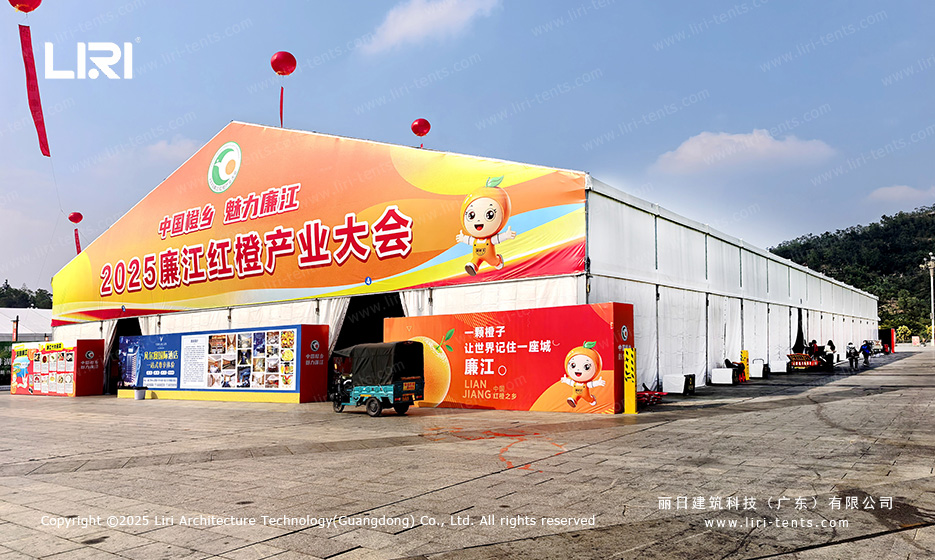
Standard Bay Components and Connection System
Each modular bay uses 3m or 5m spacing with eave heights from 3m to 4m. Bays lock together side-to-side or end-to-end using standardized connectors, eliminating the need for custom fabrication between events. The PVC roof cover at 650 to 850 g/m² carries the DIN 4102 B1 flame rating required for exhibition venues. Sidewall panels in solid, transparent, or glass configurations allow the same bay to function as a product display area, a meeting room, or a brand entrance depending on the show requirements. The frame components are identical to those used in clear span event tent combinations for food carnivals, ensuring spare parts availability across different applications.
The 6061-T6 aluminum frame requires no foundation and anchors with weight plates on hard surfaces or stakes on soil. Wind ratings reach 80 to 100 km/h, and snow load options cover 0.3 to 0.5 kN/m², allowing the same modular kit to serve both indoor exhibition halls and outdoor show grounds. Crews familiar with the system erect a modular grid in one to two days and pack the entire kit into a compact truck volume for transport between cities.
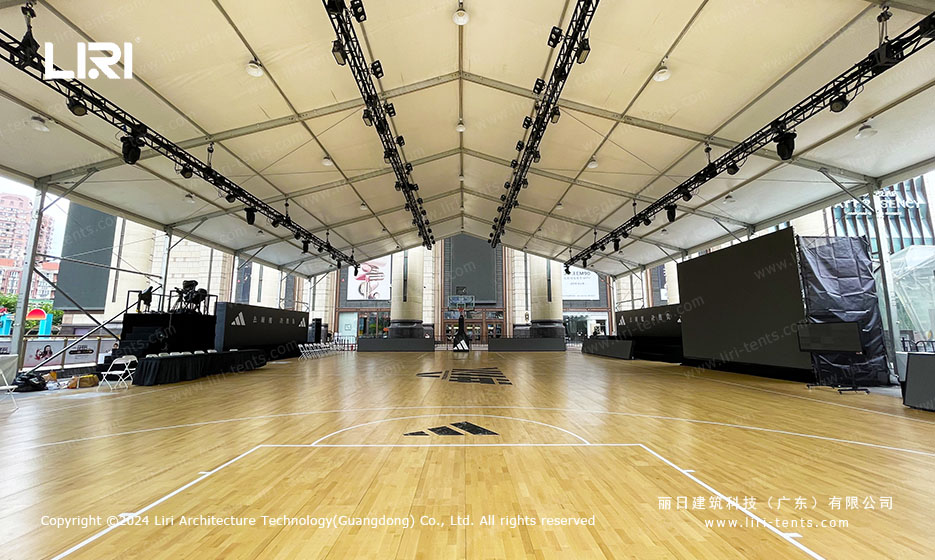
Comparing Modular Kits vs Custom Exhibition Structures
Modular kits cost more upfront than a single-event rental but become more economical after three to four shows compared to repeated custom builds. The standardized bay dimensions allow layout changes between events — the same components form a long corridor in one city and a square hall in the next. Custom structures, by contrast, require new engineering and fabrication for each footprint change. For brands on a multi-city tour, the clear span outdoor exhibition tent system provides the flexibility to adapt the booth layout to different venue dimensions without purchasing additional components.
Storage is another differentiator: modular kits pack into 20 to 30 percent of the assembled volume, fitting into standard shipping containers or small warehouses. Custom exhibition structures typically require dedicated storage space or are disposed of after single use. Flooring options include interlocking cassette systems for wheeled exhibition loads and plywood-on-beam decks for carpeted booth areas. Power and data run through floor ducts or overhead busbars that span connected bays.
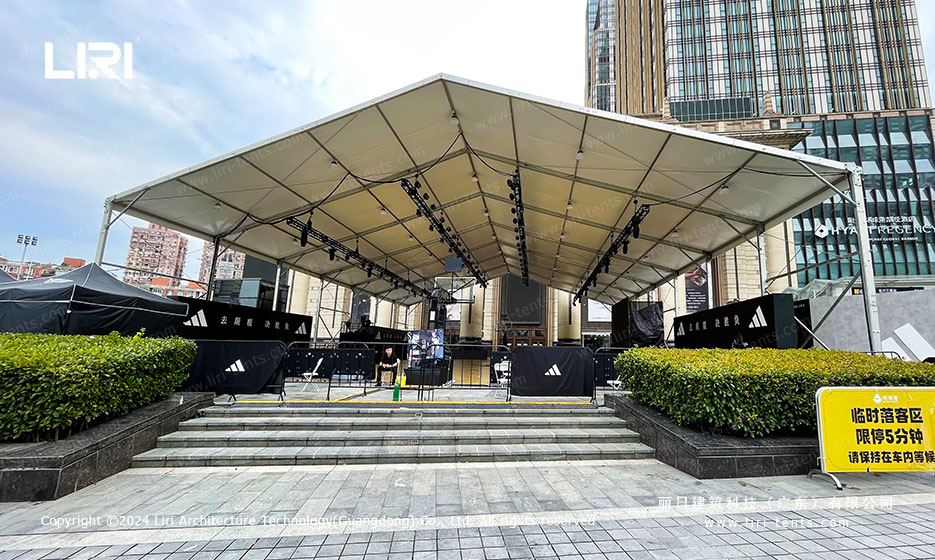
Roadshow and Brand Tour Deployment
For roadshows, recurring trade fairs, and brand activation tours where the venue changes but the exhibition kit stays the same, modular tents offer the most efficient solution. A single kit purchase covers multiple events across the calendar year, with the layout reconfigured for each venue without additional material cost. The custom exhibition event tent approach works well when the footprint remains identical at every stop, while modular systems excel when each venue has different dimensions. The reusable nature of modular kits also reduces waste generated from single-use exhibition structures, making them a sustainable choice for environmentally conscious brands.
Getting started requires the brand to provide the tour schedule and approximate footprints for each venue. The supplier specifies bay count, connector type, and wall configuration based on the largest venue, then smaller venues use subsets of the same kit. A site survey at each stop confirms ground conditions and clearance. Delivery arrives as a compact stack of labeled bays that a crew assembles without cranes. Request wall type and flooring specifications early, as those components determine the visual appearance more than the aluminum frame does.
Integration with third-party kit is where modular systems earn their keep. A 5m bay takes a standard truss run for spotlights and backwall screens without drilling into the frame, and the same eave beam carries hanging signage or a TV bracket. When the show moves, the truss comes down with the bay, so the same equipment does double duty as structure and rigging at the next venue. Because every bay uses the same connection hardware, a crew that has built the kit once can re-assemble it in a different layout on site without new drawings.
Frequently Asked Questions
What makes an exhibition tent modular?
Standardized bay dimensions and shared connector hardware allow the same frame components to form different footprints at each event. No custom fabrication or engineering is required between layout changes. This standardization is the key advantage over traditional tent structures that require site-specific engineering for each installation.
Does a modular tent system cost less than renting per event?
Yes for frequent exhibitors. The upfront purchase cost is typically recovered after three to four shows when compared to repeated single-event rental fees. Ongoing costs are limited to transport and crew labor. Brands exhibiting at more than six shows annually typically see the full return on their modular kit investment within the first season.
Can the layout change between different city venues on a tour?
Yes. The same modular blocks form a long corridor in one venue and a square hall in the next. Rearrangement happens on site during the setup day without additional component orders. Tour managers should provide floor plans in advance so the crew can plan the bay configuration before arrival at each venue.
How much storage space does the modular exhibition kit require?
Frames and covers pack flat into 20 to 30 percent of the assembled volume. A 10-bay kit typically fits into a standard 20-foot shipping container or a small warehouse corner. Compact storage is a significant advantage for brands operating from limited warehouse space between tour stops.
Are modular kits suitable for outdoor exhibition grounds in different seasons?
Yes. The frame is rated for wind loads of 80 to 100 km/h and snow loads of 0.3 to 0.5 kN/m², making it suitable for both indoor and outdoor deployment depending on the season and location. Brands exhibiting across multiple climate zones should select sidewall configurations appropriate for each venue environment.
→ Browse Exhibition Tent Solutions
Send the site details, required size and operating season for a tailored specification.
Related Posts:
 Clear Span Exhibition Tent for Qingming Riverside Scroll Exhibition | 20x40m Cultural Tour Venue
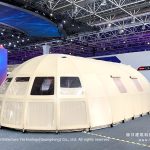 Pagoda and Dome Tents at Zhuhai Space Center | AVIC Aviation Exhibition Rest Area
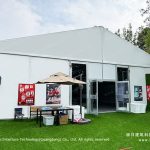 15X15m Clear Span Tent for Exhibition Hall | Temporary Outdoor Exhibition Tent
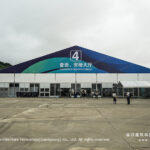 Clear Span Event Tent for Exhibition Function