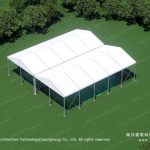
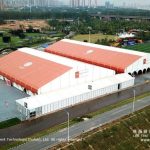
A farmers market canopy does one job that matters more than looks: it keeps a row of stalls trading through sun, wind and sudden rain. Producers lose a full day of sales the moment a downpour hits open ground, and a proper frame changes that.
Most weekly markets run on aluminium clear-span frames or pagoda canopies, and the outdoor canopy and tent options cover both. The same farmers market canopy that shields vegetables one Saturday can shelter crafts the next.
What a farmers market canopy actually covers
A farmers market canopy is the frame and roof over a single stall or a connected run of stalls, not a decorative parasol. Most weekly markets run on aluminium clear-span frames or pagoda canopies, because both go up on grass or hardstanding without poles blocking the aisle.
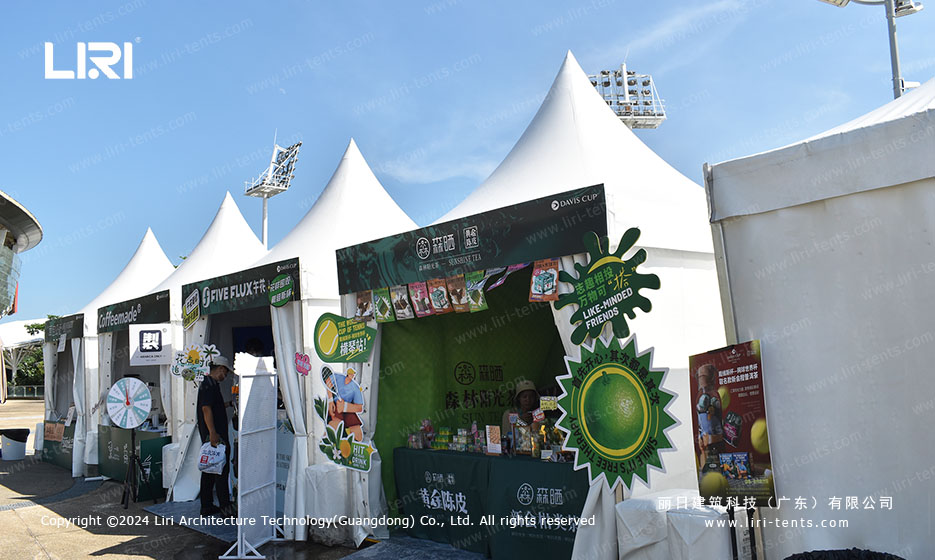
Vendors care less about shape and more about headroom; a 3m to 4m eave clears crates and keeps the selling aisle open.
Sizing a stall row against footfall
A market with ten stalls needs more than ten separate canopies. Shoppers move along a walkway, so a 2m to 3m cleared aisle between rows matters as much as the cover itself. A clear span pop-up shop tents setup joins bays into one long hall, which reads as a proper market rather than scattered umbrellas.
Local markets differ, but a 20x40m clear span hall seats a sizeable trading row under one roof.
Weather, ground and drainage on open sites
Open ground is where most markets fail. Wind lifts lightweight canopies, and pooled water underfoot drives customers away, so ballast and a slight site fall matter. A temporary outdoor supermarket tent shows the same principle: a weighted frame and a guttered roof keep the floor dry.
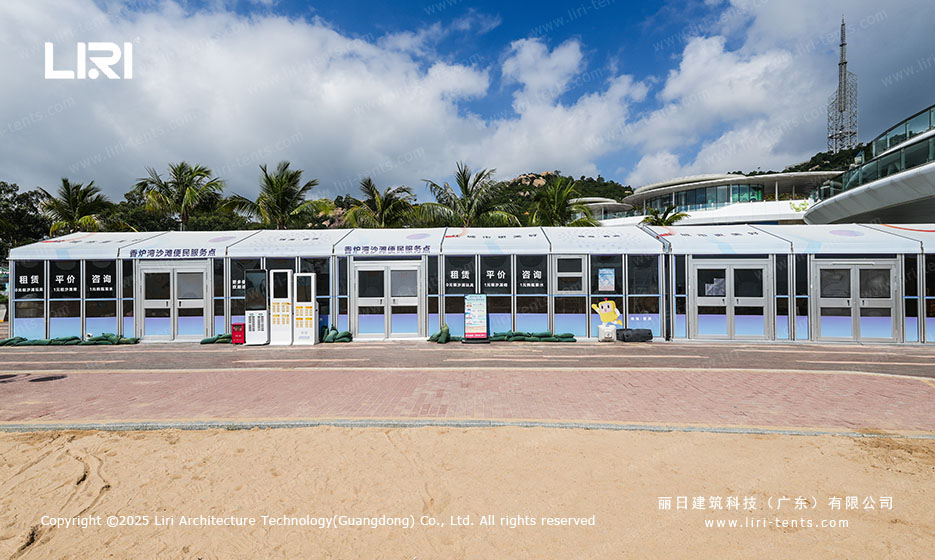
Grass needs longer stakes or water ballast; tarmac needs base plates. Drainage is the difference between a market that runs and one that cancels.
One frame, many market days
A good frame earns its keep by being reused, not stored. Modular bays clip together for a summer food festival and come apart for a small weekly stall, and the same kit serves a catering tent setup for festivals and a Saturday market alike. Outdoor canopy tents for events cover the same need when a one-off fair lands midweek.
The saving is in labour, not just the hire fee.
Frequently Asked Questions
How much does a farmers market canopy cost to hire?
A weekend hire for a single aluminium stall canopy runs from a few hundred to low thousands of pounds by span and walls. Longer seasonal contracts price lower per day.
Do I need permission to set up on public ground?
Yes, most town squares and parks need council or landowner permission, and a market often needs a public liability note and a site plan. Book the ground before sizing the frame.
How long does setup take on market day?
A two-person crew puts up a standard stall canopy in roughly 20 to 40 minutes; a row of ten takes a morning. Arrive before trading opens.
Can the same canopy serve a food stall?
Only with the right walls and a separate preparation zone, since food stalls carry hygiene rules a produce stall does not. Use a dedicated bay with wipe-clean panels and keep raw and ready-to-eat stalls apart.
Markets live or die on whether they run through bad weather. A frame that goes up fast, drains clean and reuses week after week is the quiet part of a good trading day.