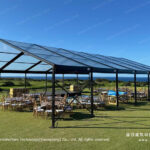
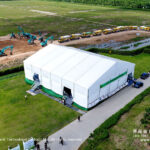
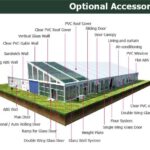
Build your event using tent rentals when the occasion needs a real venue but the calendar cannot wait for a permanent build. A rented clear span tent turns an empty lawn, a parking lot, or a park field into a weatherproof hall within a day, and it disappears just as fast after the last guest leaves. Festivals, concerts, exhibitions, and sports days all use the same principle: plan the zones first, then match the tent to the headcount. Teams that run events on a budget usually check special event tent rental options before they commit to a venue contract.
Planning the Layout Around the Guest Count
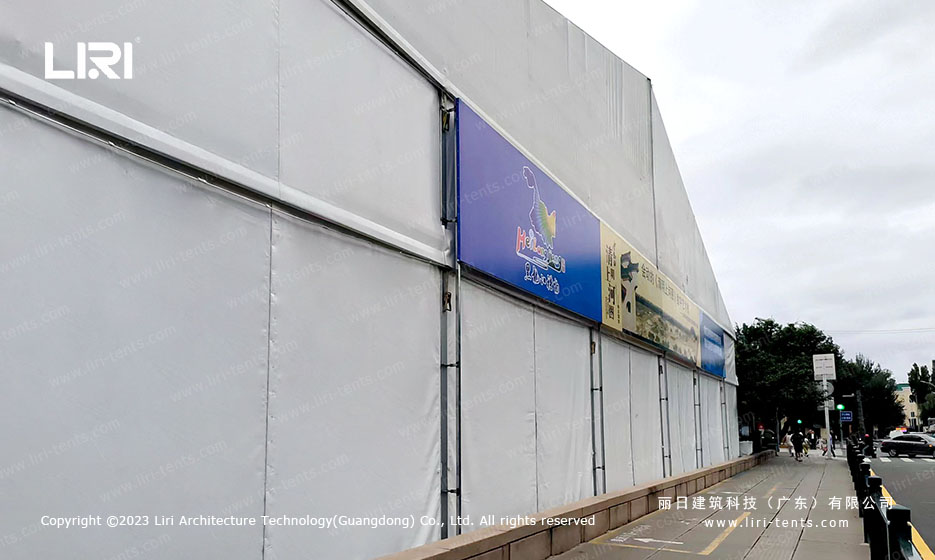
Start with the number of guests, then work out the floor plan, because the headcount decides the footprint more than any other factor. A small graduation party of 80 people fits a 10 by 15 m tent with chairs, buffet tables, and a corner for the dance floor. A corporate reception for 500 guests needs a 20 by 30 m hall, and a full trade event with vendor booths pushes the same space toward 30 by 60 m with aisle planning.
The tent purpose also sets the style: pole tents suit lawn weddings with their high peak, while clear span frame tents carry heavier loads like stages and lighting rigs. A single popup shelter covers a trade show booth with two or three people, but a main venue needs several frame or pole units arranged with covered walkways between them. Before ordering, confirm the usable site area, the anchor surface, and the access route for the delivery truck, then let the crew lay out the zones from the entrance in.
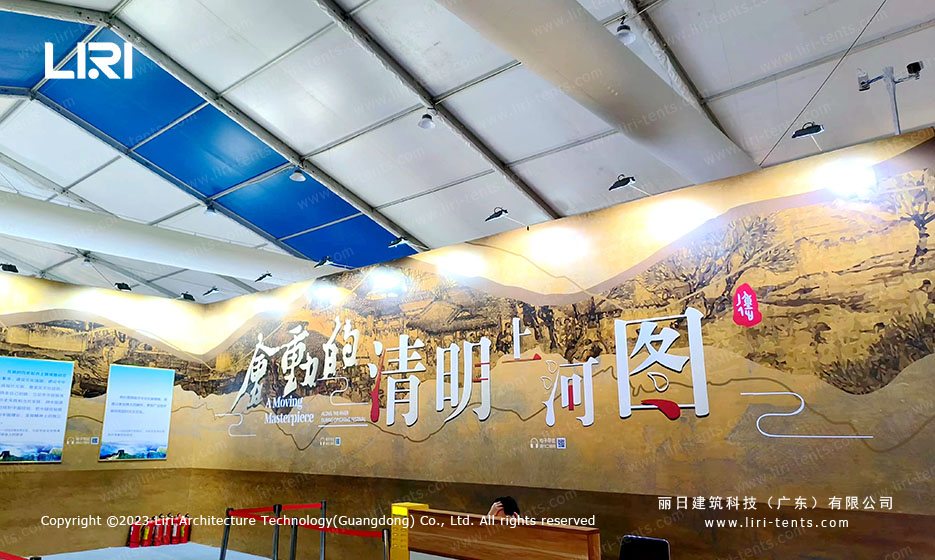
Arrange the rented space by function rather than by guesswork: food vendors along one side, merchant stores across the back, and first aid and stage crew covers near the exit. Clear signage at each opening helps guests navigate an unfamiliar field without walking through the kitchen or the storage area. Many event teams add a second tent beside the main hall for registration and coat check, which keeps the entrance line out of the dining space entirely.
Tent Rentals vs Permanent Venues
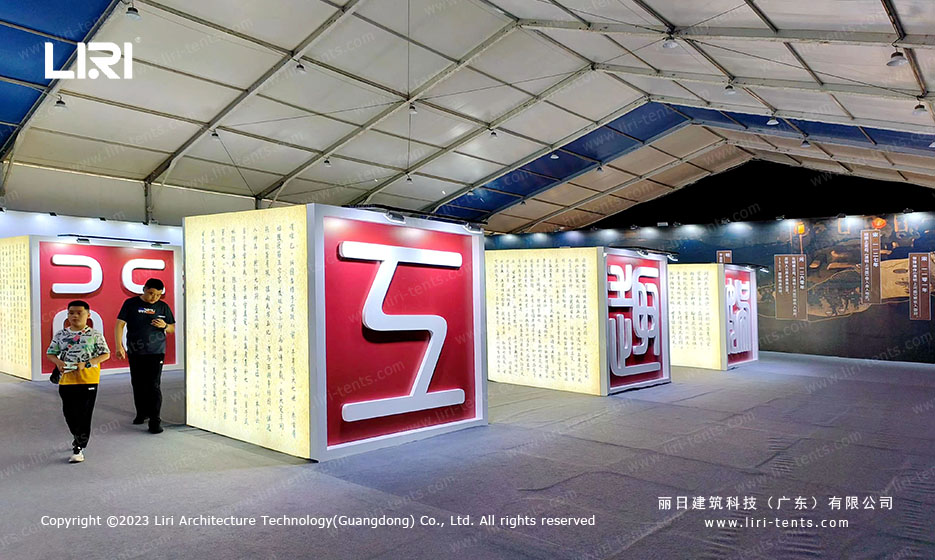
A rented tent gives planners freedom that a fixed venue cannot match: the size, shape, and layout adapt to each event instead of forcing the event into a building. Indoor or outdoor, 100 guests or 1000, the same kit family scales by adding bays or swapping wall panels. That flexibility matters most for seasonal businesses, because a summer festival can run on a grass field one weekend and a paved plaza the next without changing the booking process.
Cost compares favorably too, because rental covers delivery, installation, and removal in one invoice, while a permanent hall carries land, construction, and maintenance year round. The trade-off is lead time: a stocked rental unit is on site within days, while a custom build ships in three to six weeks. Review clear span event tents for rent guides to see how bay widths and wall packages change the final price before you sign.
Storage and setup are the rental company’s problem, which frees the event team to focus on catering, entertainment, and guest experience. Most suppliers deliver the frame in numbered crates, assemble it in a day or two, and strike it after the event with the site returned to its original state. That reversibility is the core reason outdoor events keep choosing tents over fixed structures, especially on leased or public land.
Climate Control for Year-Round Use
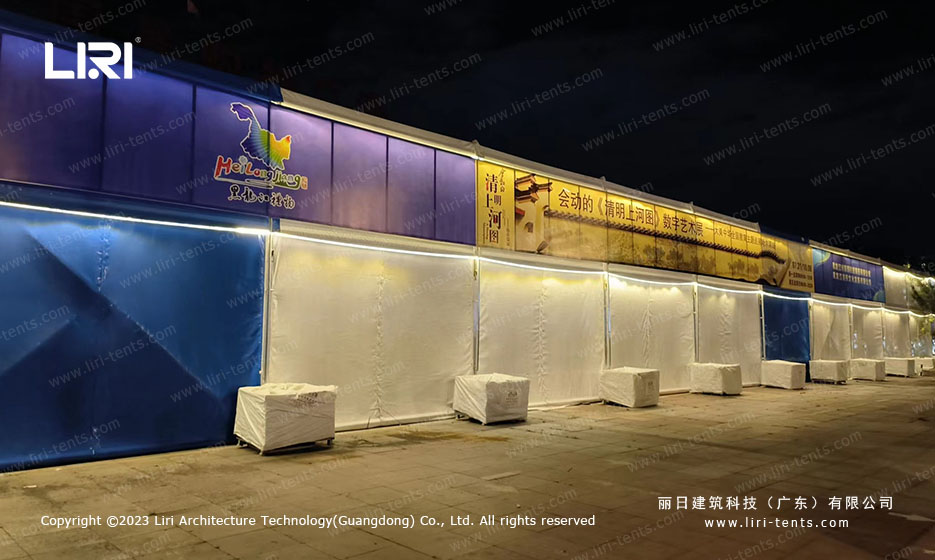
Rental tents work in every season, not just summer, because modern packages include climate control. In winter, heating systems keep guests comfortable against the cold, and in summer, air conditioning units hold the interior temperature steady even through peak afternoon heat. Insulated linings and double layer roofs reduce the load on the HVAC units and cut the energy bill for long events.
The spec sheet matters more than the brand name: an 850 gsm double PVC coated roof with flame retardant approval to DIN4102 B1 protects the whole crowd, and a wind rating of 100 km/h with proper anchoring keeps the build safe in gusty conditions. Ask the supplier for the anchor plan, the ballast count, and the power requirement for the HVAC package before the event date, so the generator or site power matches the load. When storage space is the issue, family party tent rental sizes and temporary storage units cover everything from a garden party to a warehouse overflow.
FAQ: Frequently Asked Questions About Building Events With Tent Rentals
How far in advance should I book event tent rentals?
Book four to six weeks ahead for a stocked rental unit, and eight to twelve weeks if you need a custom size or a specific color package. Peak wedding and festival season books out faster, so lock the date early even if the layout is still changing. A deposit holds the unit, and the final layout can usually be adjusted closer to the event.
Can tent rentals be used outdoors all year?
Yes, with the right climate package the tents work through winter and summer. Heating systems protect guests in cold weather, and air conditioning keeps the space comfortable in the heat, while the flame retardant PVC cover handles rain and wind year round. Insulated linings make the interior more efficient for long events.
What size rental tent do I need for my event?
Match the footprint to the guest count and the seating style: 100 guests need roughly 10 by 15 m, 300 guests fit a 15 by 25 m hall, and 800 guests require a 20 by 40 m clear span. Add spare floor for a dance floor, buffet line, or stage so the room never feels crowded. For a reception that mixes dining and a program, commercial marquee for corporate event layouts show how to split the floor cleanly. The rental company confirms the anchor and access requirements from your site survey.
Do I need a permit to set up rental tents?
Most temporary structures on private land need no building permit, but public parks and leased sites often require a simple notification. The rental company usually handles the paperwork or provides the structural drawings for the venue’s approval. Ask about this when you book, because the permit lead time varies by city.
→ Browse Custom 10×40 Event Tents for Rental
Send the site details, required size and operating season for a tailored specification.