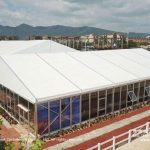
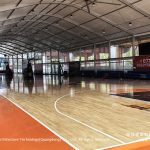
When a riding club needed a permanent-feeling training venue without the cost and delay of conventional construction, a 30x35m equestrian arena tent became the practical answer.
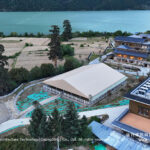
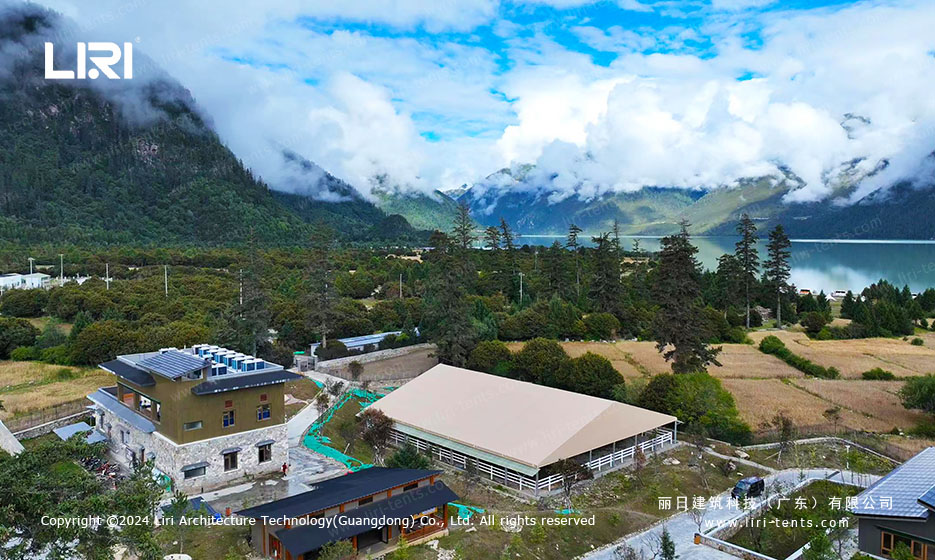
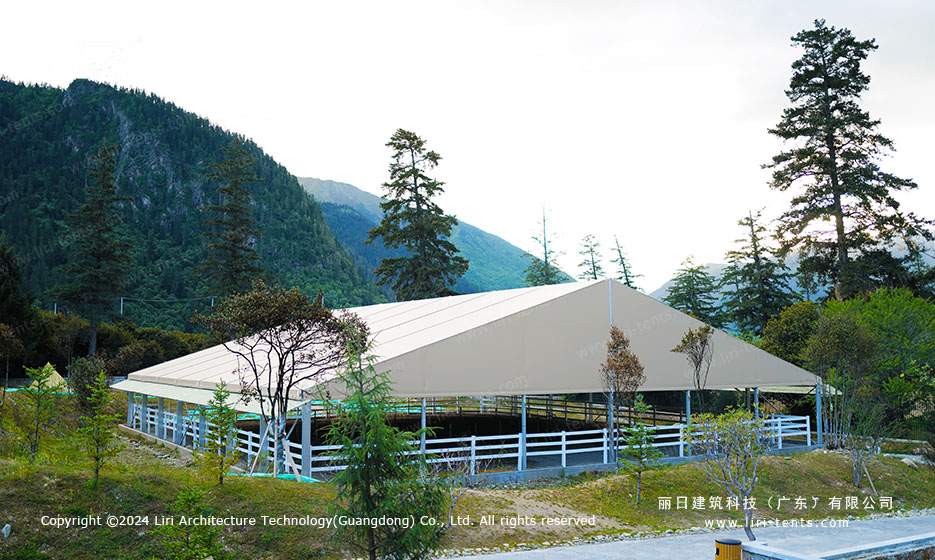
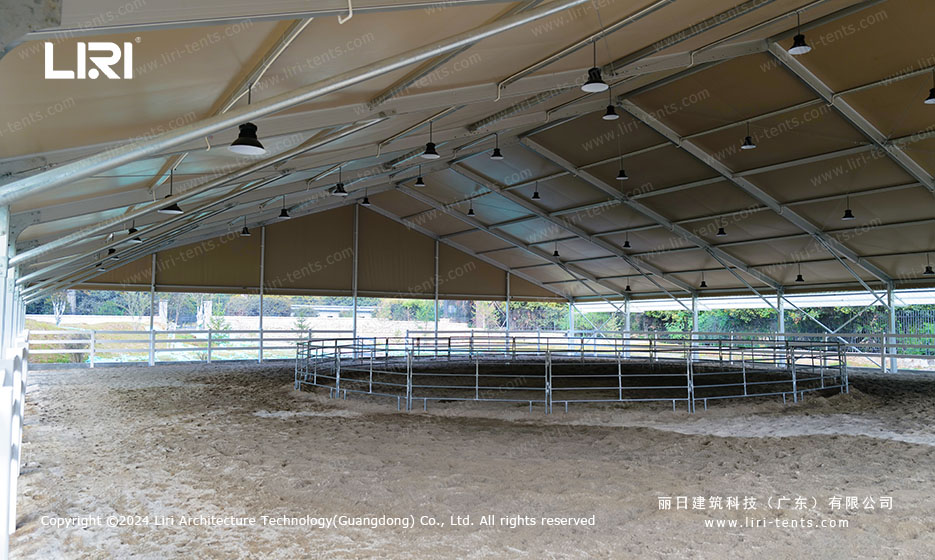
Set against forested mountain slopes, the structure covers a full sand training surface while staying open to light and airflow on the long sides. The result is an indoor facility that handles daily training, small competitions, and visitor demonstrations under one clear span sports hall tent roof.
Why Clear Span Engineering Works for Equestrian Arenas
A riding arena depends on uninterrupted width. Posts in the middle of the floor would split the ring, block lunging circles, and create hazards for horse and rider. The clear span event tent format removes every interior column by carrying the roof loads through reinforced aluminum trusses to the outer frame. That gives the full 30-meter width as usable floor space, which is exactly what an equestrian program needs for dressage tests, jump schools, and group lessons.
The frame uses a hard-pressed aluminum alloy with bolted connections, a combination that keeps the total weight low for transport while resisting the lateral loads created by mountain winds. A double-sided PVC fabric roof provides waterproofing and diffuses direct sun, so the interior stays bright without overheating. For anyone comparing heavy duty event tents for sale for livestock or training use, the combination of column-free span and durable cladding is the deciding factor.
Sizing the 30x35m Layout for Training and Events
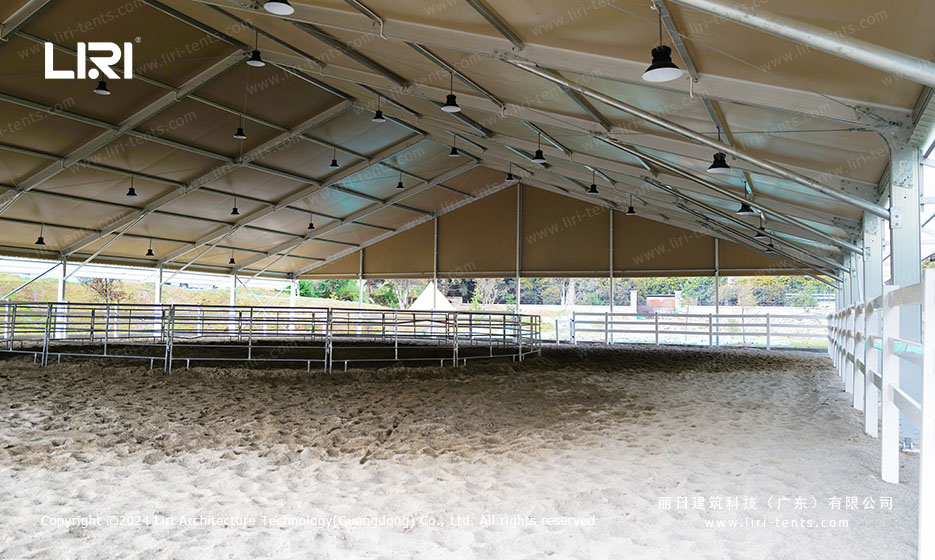
The 30x35m footprint delivers roughly 1,050 square meters of covered area. Inside, the club laid a regulation sand base, added a perimeter fence, and installed overhead lighting on the trusses. The extra length along one axis makes it possible to set up a full 20×60-meter dressage arena with room remaining for warm-up lanes or temporary seating. When the tent is not being used for competition, the same space hosts training groups, farrier visits, and equipment storage.
Side heights on this aluminum frame event marquee were chosen to give enough clearance for jumping and for handlers on horseback. The modular bay design also means the tent can be extended later if the program grows. Buyers looking at sporting event tents for sale often discover that a temporary structure can serve for five to ten years with proper maintenance, making it a cost-effective alternative to a steel building during the early years of a facility.
Climate, Terrain, and Installation Considerations
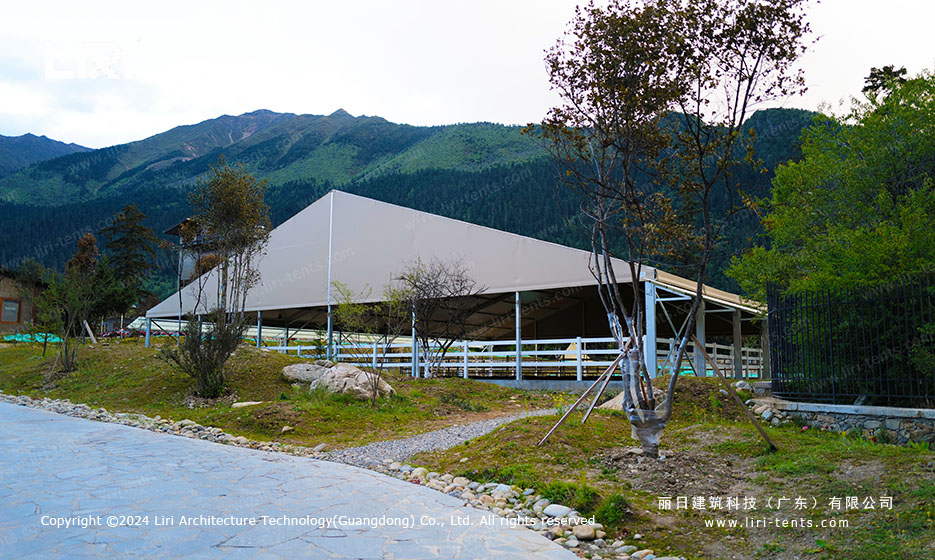
Mountain sites bring real weather. Wind funnels down valleys, rain arrives quickly, and ultraviolet exposure is stronger at altitude. The membrane used on this event tent is flame-retardant and UV-stabilized, and the frame is hot-dip galvanized where it contacts the ground. Anchor loads were calculated for the local wind profile, and the tent is fixed with a mix of concrete ballast blocks and steel stakes driven into the compacted base.
Because the tent is classed as a temporary structure, it avoided many of the permitting delays tied to permanent buildings. The outdoor event tent manufacturer supplied installation supervision, and the entire structure was assembled on site in under two weeks. For clubs and resorts that need covered riding space fast, that speed is often more valuable than the material savings alone.
Ground conditions change the anchor design more than any other variable. On packed clay the crew used 900mm screw piles every 4m along the perimeter; on a softer paddock section they doubled the count and added diagonal cable bracing on the two end gables. The membrane spec for the arena was 850g PVC with a 15-year UV warranty, and all seams were welded rather than taped, which matters when horses kick up dust and debris against the lower panels over years of use.
Ventilation planning also differs from a typical party marquee. Ridge turbines and louvered gable ends were sized so that ammonia and dust from the footing surface clear out during training sessions, and the roof pitch was set to shed heavy seasonal rain without ponding. The same layout principles apply to a smaller sport event tent for tennis or any indoor training hall built for daily athlete use.
Common Questions About Equestrian Arena Tents
How much clear width does an equestrian arena tent need?
A small private ring can work at 15 meters, but a training or competition arena benefits from 25 meters or more. This 30-meter-wide equestrian arena tent leaves enough margin for jumps, dressage letters, and passing lanes without crowding the walls.
Can horses tolerate the noise from a PVC roof during rain?
Modern PVC membranes used in outdoor event tent construction are multi-layered and do not drum like single-layer tarps. Many horses adjust within a few sessions, and trainers often introduce the space gradually before moving to full workouts.
What anchoring is safest for an indoor horse training arena on sloping ground?
Engineers typically combine steel stakes, concrete ballast, and tensioned guy lines. A site survey measures soil bearing capacity and slope, then the anchor plan is matched to the expected wind load. The goal is to keep both the frame and the animals safe.
How does a 30x35m tent compare to a permanent riding hall?
A permanent hall offers decades of life but requires foundations, permits, and a much larger budget. An aluminum frame event marquee of the same footprint can be installed quickly, relocated if the land use changes, and upgraded with walls, doors, or insulation as budgets allow.
Planning Your Own Indoor Horse Training Facility
Whether you operate a riding school, a breeding farm, or a resort that offers trail rides, a covered arena extends the usable day and protects your footing investment. Start with the discipline you teach, the number of riders you expect, and the worst weather you face each year. Then match those needs to a clear-span span, sidewall height, and cladding package.
If you are comparing event tents for sale for an equestrian project, look at frame certification, fabric fire ratings, and the supplier’s experience with similar installations. Reviewing a completed event tent gallery is the fastest way to confirm that the structure, finish, and scale match your plans.
Send the site details, required size and operating season for a tailored specification.