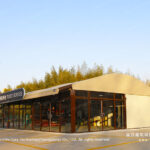
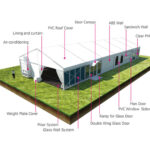
A modular exhibition tent solution for space lets a stadium add hospitality without a permanent build, and the same clear span frame carries both safety and style. A stadium tent has to look sharp and still pass a safety review, because crowds and crew both depend on it, and the aluminum frame is rated while the PVC is fire-classed so the open floor clears sightlines. This guide covers the ratings that satisfy the review, the dressing that sells the brand, and the match-day build that fits a fixture list.
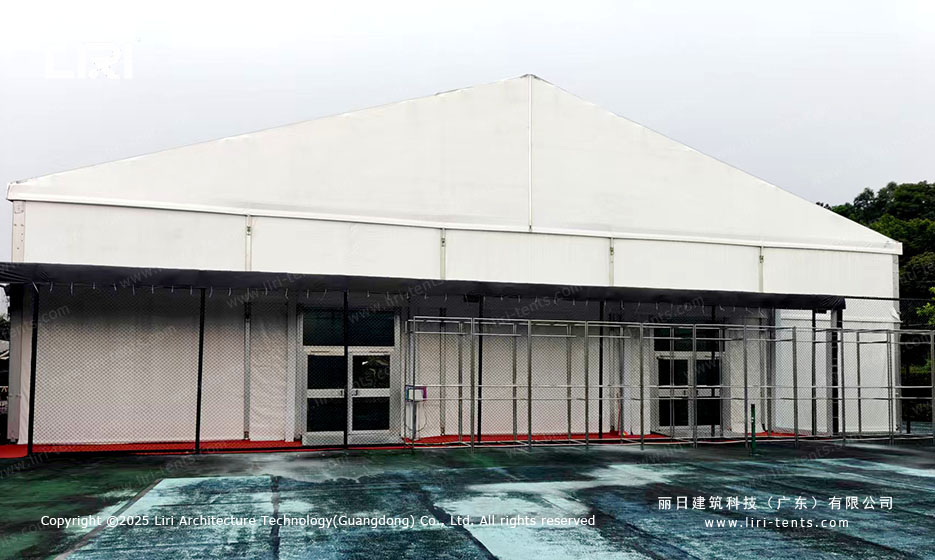
Safety Ratings That Matter
The frame in 6061-T6 aluminum holds 80 to 100 km/h wind and 0.3 to 0.5 kN/m² snow load, so a match-day storm does not halt the build or risk the crowd. The roof PVC at 650 to 850 g/m² carries a B1 fire rating, which most venue and insurer rules require before anyone walks in. Exits are sized to the crowd, service doors cut into the walls give controlled in and out, and the open span means no pole blocks a quick path to the gate.
For the load math behind a sports build, the clear span tent for basketball game shows the same rated frame dressed for an indoor arena precinct. Keep flame sources under rated canopies and document the loads, because those two steps usually clear the inspector without a second submission.
Ratings Versus Style Trade-offs
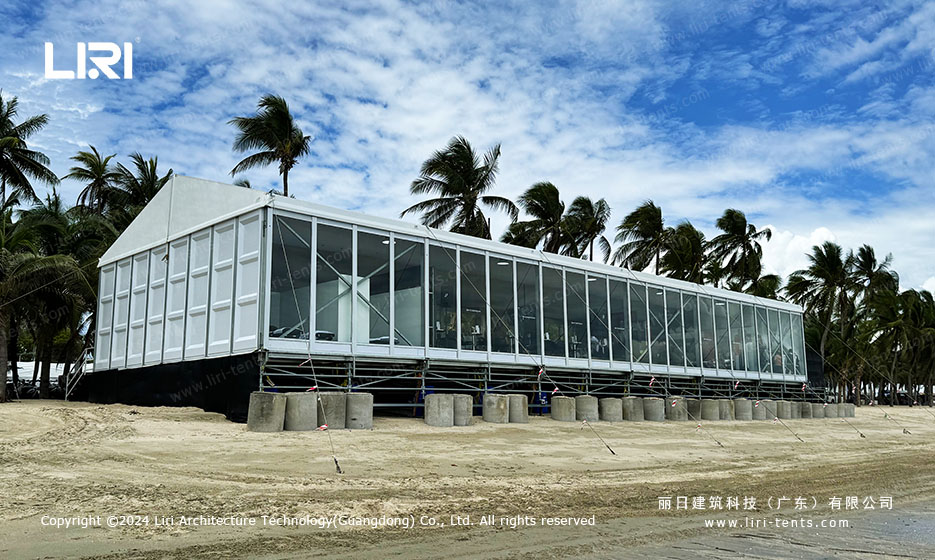
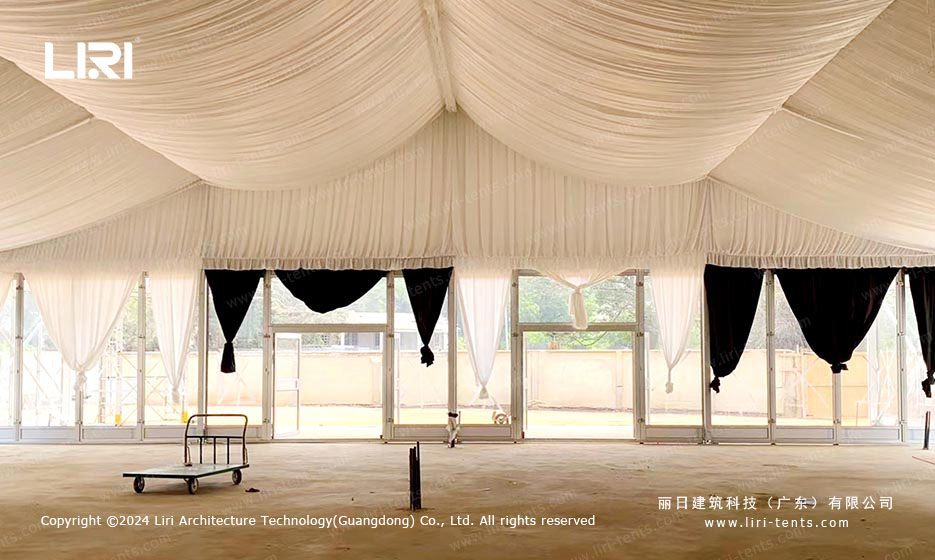
Safety and style pull in opposite directions only when you spec late. Lead with the wind and fire numbers, then dress the shell so marketing signs off in the same meeting. White PVC reads clean against a pitch, clear wall sets bring the field inside for hospitality, and linings clip to the frame so a sponsor lounge looks built-in rather than hired.
Branding hangs from the roof truss, so you light a sponsor wall without extra stands on the floor, and the high altitude clear span tent for winter sports proves the same frame works from a warm precinct to a cold mountain venue. The rated structure stays constant while the wall and lining change with the climate and the crowd.
Build and Strike on Match Days
The bay system lets a crew raise a hospitality tent in a day and drop it before the next fixture, because anchors are stakes or ballast so the surround stays undamaged through a season. A hospitality bay that goes up on Friday and down on Monday fits a home game without blocking the concourse, and gutter kits join bays to the existing structure so guests walk covered from gate to lounge.
Specs at a glance: span 3 to 40m; bay 3m or 5m; eave 3 to 6m; frame 6061-T6 aluminum; roof PVC 650 to 850 g/m² B1; wind 80 to 100 km/h; snow 0.3 to 0.5 kN/m²; wall sets solid, clear, glass; floor cassette or plywood on beams; anchors stakes or ballast. These let safety and marketing sign off together, and the clear span structure tent for exhibition function covers the same quick-turn build for a trade area beside the stand.
Booking the Build Window
Agree the build window with the club before the fixture list locks, because match days set the strike deadline and the crew needs the slot. Share the wind and fire ratings with the safety officer up front, since those numbers usually clear the review without a second submission, and plan power for the bar, the screen, and the kitchen from one busbar run with generators outside the skin. If the precinct hosts a fan zone, gutter kits join the bays to the existing structure so guests walk covered, and a small storage bay keeps the linings and trusses tidy for the next match.
For a tropical motorsport precinct, the sanya formula e event tent tropical motorsport shows the same frame dressed for pit and VIP use. A short rehearsal with the ground staff the afternoon before catches any anchor or cable snag, and a clear handover note keeps the kit ready for a midweek event.
FAQ: Frequently Asked Questions
Will the stadium tent pass a fire inspection?
The B1-rated PVC and the rated frame usually satisfy the review, because both are documented against the venue and insurer rules. Keep flame sources under rated canopies and hand the load sheet to the safety officer before build.
How quick is match-day strike at a stadium?
A standard hospitality bay comes down in a few hours, so the stadium precinct returns to normal before the next event. Stakes and ballast leave the surround intact, which is why grounds teams accept the return visit.
Can it link to the stadium concourse?
Yes. Gutter kits join bays to the existing structure, so guests walk covered from gate to lounge without stepping into the weather. The same join works for a fan zone or a trade bay.
What safety solutions does a stadium hospitality bay need?
Plan for the bar, the screen, and the kitchen from one busbar run, and place generators outside the skin so the floor stays clear and the safety file stays short. The modular exhibition tent solution for space uses the same single-run plan for a trade hall.
→ Browse our sports and stadium clear span tent projects
Send the site details, required size and operating season for a tailored specification.