Buying a suitable event tent starts with the brief, not the brochure. The right structure fits the guest count, the ground, and the weather you actually face, then leaves the rest of the budget for the things guests remember. Planners who want a straight path should read the how to choose suitable event tents before they shortlist widths.
Match The Frame To The Guest Count
A event tents for sale program runs from a single 3m bay to a linked 60m clear span, so the first number to lock is heads under cover. A seated banquet needs about one square metre per guest plus aisle and service space, while a standing reception fits closer to half that. Give the supplier the headcount and the layout and the width follows, instead of forcing the plan to fit a frame you already bought.
Pick The Use Before The Spec
The same event tents range covers a product launch, a wedding, and a covered depot, but the fit-out changes with each. A launch wants open bays and clean sightlines to a stage; a wedding wants linings, a dance floor, and a calm acoustic; a storage cover wants hard walls and a roller door. Write the three things the space must do, then size the bays and the options to those, not the other way round.
Site, Ground, And Access
Ground decides the anchor. Grass takes stakes, hardstand takes ballast blocks, and a sloping lawn needs a level deck so the floor reads true. Access decides the crew size more than the frame price, because a long carry from the road adds hours. Walk the site with the supplier before you buy so the quote covers delivery, the anchor type, and the turn the truck needs.
Build, Strike, And Storage
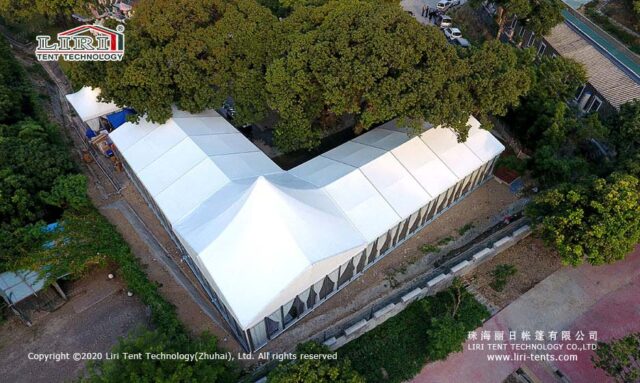
A clear-span event tents frame builds in a day and strikes in a morning, but only if the bays are planned and the parts are labelled. If you run a few events a year, weigh the stored frame, the linings, and the flooring against hiring instead. For a one-off, a hire folds all of it into one invoice and one crew, which is the cleaner math for most buyers.
Options That Earn Their Place
unique wedding event tents show how linings, glass walls, and climate control change a plain bay into a venue. Add only what the brief uses, because every option is weight, cost, and time on site.
Certification And Longevity
A frame you buy should carry wind and fire ratings that satisfy the venue and the insurer, and the PVC cover should be rated for repeated erect-and-strike without tearing. wedding event tents built on a 6061-T6 aluminium frame with a double PVC cover will outlast several seasons of use, so the per-event cost drops the more you use it.
Frequently Asked Questions
How do I start buying a suitable event tent?
Start from heads under cover: a seated banquet needs about one square metre per guest plus aisle and service space. Send the headcount and layout and the width follows.
Do I need foundations?
No. The frame sits on ballast or stakes and leaves the ground undamaged.
How fast can it be built?
A standard structure builds in one working day, with strike the following morning if the schedule needs it.
Buy or hire for one event?
For a single occasion, hire folds the frame, linings, and crew into one invoice. See the suitable event tents guide for the buy-versus-hire maths, or compare the outdoor event tent range for seasonal use.
Tell us your venue size, surface, and timeline — we return a stamped layout, ballast specification, and a quote.
Send the site details, required size and operating season for a tailored specification.