A temporary exhibition hall RFP should let suppliers price the same scope. When one offer includes flooring, unloading and installation while another covers only the frame and fabric, the headline totals tell the procurement team very little. Define the hall package, the site interfaces and the evidence required at handover before asking for bids.
This approach is for organizers buying a temporary hall for a trade show or exhibition. It focuses on allocating work and comparing proposals. For the wider ownership decision, start with the commercial event tent buying guide.
Give every bidder the same baseline
Issue a dated brief with a drawing register. Include the site address, event dates, access period, dismantling deadline and proposed hall layout. Record which documents are confirmed and which remain provisional. A supplier should be able to trace its offer back to the same revision the other bidders received.
Describe the intended exhibition operations: booth arrangement, large displays, registration, freight entry and any separate hospitality or service spaces. Identify who will provide information about the ground, underground services and venue restrictions. Where details are unresolved, ask each bidder to list assumptions and the information needed to confirm its proposal.
Make alternative proposals a separate schedule. Otherwise, a smaller floor package or different wall system can look like a price saving while changing the requirement. Compare compliant base offers first, then review alternatives with their consequences visible.
Separate the hall package from show services
The structure supplier, venue and exhibition service contractors may have different responsibilities. IAEE’s event-operations workbook describes official service contractors and their coordination with specialty contractors and exhibitor-appointed contractors. It also explains that responsibilities vary between markets. Record the actual arrangement for your event in the RFP.
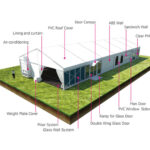
Use a scope schedule such as the one below. The entries are questions for the buyer to allocate, rather than a claim that every tent supplier provides every service.
| Scope item | What the bidder must state | Buyer interface to identify |
|---|---|---|
| Structure and enclosure | Quoted configuration, components, walls and doors | Organizer approves the required hall arrangement |
| Ground interface | Included anchoring or ballast proposal and its dependencies | Venue supplies restrictions; competent specialists review the actual site |
| Flooring and access | Included floor package, thresholds and proposed access details | Exhibition layout and delivery requirements are coordinated |
| Electrical and climate services | Equipment included and where the supply scope ends | Named contractors confirm distribution, connections and review responsibilities |
| Freight and installation | Delivery point, unloading, crew and installation scope | Venue access and show-contractor working windows are agreed |
| Handover and removal | Documents, inspection participation and dismantling scope | Named people accept the handover and record remaining issues |
Assign an accountable contact to each interface. A phrase such as “power by others” needs a named party, a defined connection point and an agreed information deadline. The same principle applies to unloading equipment, temporary storage and floor preparation.
Ask for evidence tied to the quoted configuration
Ask suppliers to identify the drawings, component schedules, installation information and applicable material documents included in their price. The document list should refer to the configuration being quoted. Mark any project-specific engineering, local professional review or authority submission that remains outside the offer.
A clear span event tent provides a useful structure family to discuss, but the product name alone does not settle the site proposal. Confirm the selected arrangement and the intended use together. The project-specific engineering overview explains the inputs to bring into that review.
Ask who prepares each document, who reviews it and when it will be available. Separate the bidder’s current supporting material from documents promised after contract award. Procurement can then see whether an unresolved approval dependency affects the delivery commitment.
Compare bids with exclusions visible
Build one comparison sheet with a row for every scope item. Useful columns are the base price, included quantity or configuration, exclusion, assumption, responsible party, supporting document and clarification status. Keep each supplier’s proposed alternative outside the base comparison.
If a bidder excludes a necessary service, record it as an unresolved cost or responsibility. Obtain an actual allowance or a separate quotation before comparing the total project commitment. Do not fill gaps with an invented percentage.
Use the clarification round to resolve differences in writing. For example, if one offer includes unloading and another stops at delivery, ask the second bidder to price unloading separately or identify the buyer’s required equipment and responsibility. Preserve the revised scope alongside the revised price.
Agree acceptance and changes before award
Define what the buyer will receive when the structure work is handed over. The proposed record can identify the installed configuration, documents delivered, inspection participants, open issues and the person responsible for closing each issue. Acceptance arrangements must fit the contract and local review requirements.
Include a process for layout changes. A late door relocation, additional service opening or altered equipment requirement should have an agreed review route, a written cost or schedule response and an updated document revision where needed. The procurement team should know who may authorize the change.
Keep a short award record explaining which offer was selected, which clarifications form part of it and which dependencies still require action. That gives the installation and exhibition teams a usable starting point after procurement hands over the contract.
Prepare the supplier discussion
Send the site drawing, intended exhibition layout, working dates and scope matrix together. Ask the supplier to identify the proposed hall package and its exclusions against that brief. Once the interfaces are visible, the team can discuss the configuration and price with fewer unresolved assumptions.
Request a review of your exhibition hall brief with the site details and proposed supplier responsibilities.
Industry reference: IAEE, Event Operations workbook (2023). The scope matrix and comparison fields above are proposed buyer working tools. They are not an engineering design, a local approval checklist or a prescribed contract form.