A product launch needs a stage that matches the product. Product launch tents give a brand a covered space to unveil and demo without relying on the weather or a booked venue. The frame is usually clear-span, sized for the reveal.
Most launches are short and busy, so the tent holds a crowd, a demo zone and a stage at once. The same clear-span logic scales from a booth to a hall, as exhibition event tents for spring canton fair show in practice.
What a Product Launch Tent Should Deliver First
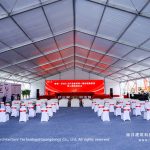
The first job is a clean backdrop and a dry floor. A clear-span frame has no interior poles, so the product and the audience share one open space and the eye goes to the stage.
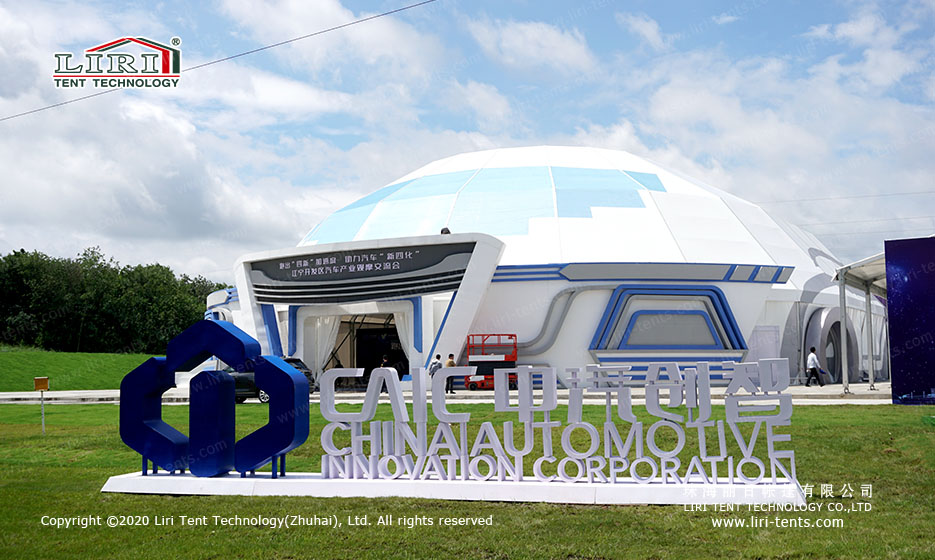
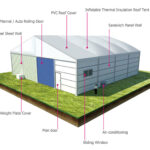
Lighting and power come next, because a launch lives on how the product reads under lights. A sealed PVC roof blocks glare and rain, and sidewalls quiet the room. Outdoor event tents for auto show launches follow this reveal-first logic.
Frame and Roof Choices for a Branded Reveal
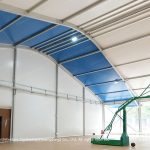
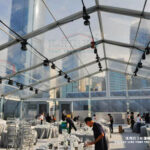
Clear span is the default for launches: it spans wide bays without posts and takes a full-height graphic wall. An arcum roof softens the silhouette, and a glass wall panel brings daylight in.
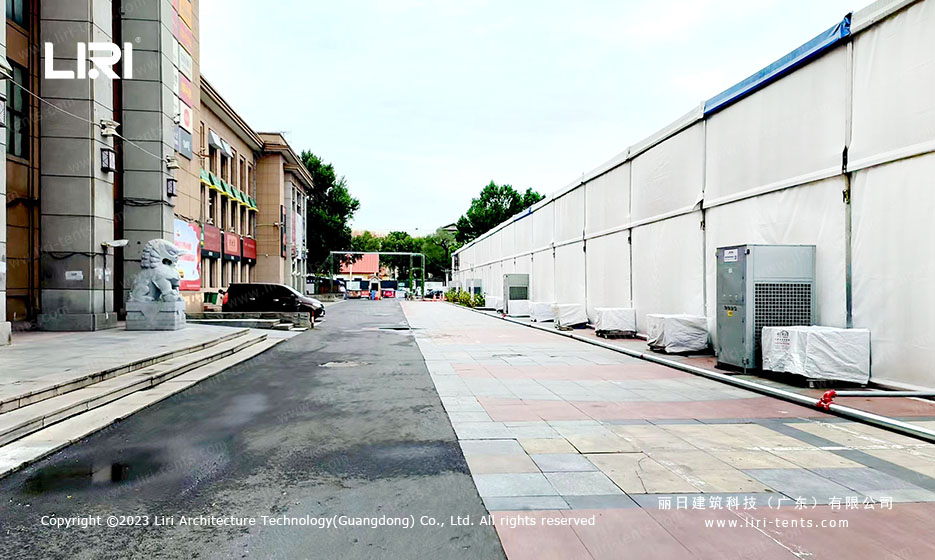
Branding sits on the structure, not beside it. Printed valances and a lit logo beam make the tent read as the brand’s space, and a clear span structure tent for exhibition function uses the same wall system.
Sizing by Guest Count and Demo Footprint
Start from the demo, not the headcount. A reveal needs roughly 100 to 150 sqm of clear floor per hero unit once surround and rail are added.
Add guests at about 1.0 to 1.5 sqm each, then leave room for a stage and press pen. Product launch tents are planned around the demo footprint, and clear span tents for large outdoor exhibitions links bays into one circuit.
Layout, Branding and Lighting for a Press-Ready Launch
Product launch tents work best when the plan zones each function: arrival, demo, stage, press, then hospitality. Put the hero product on the long axis and run cabling under a floor grommet.
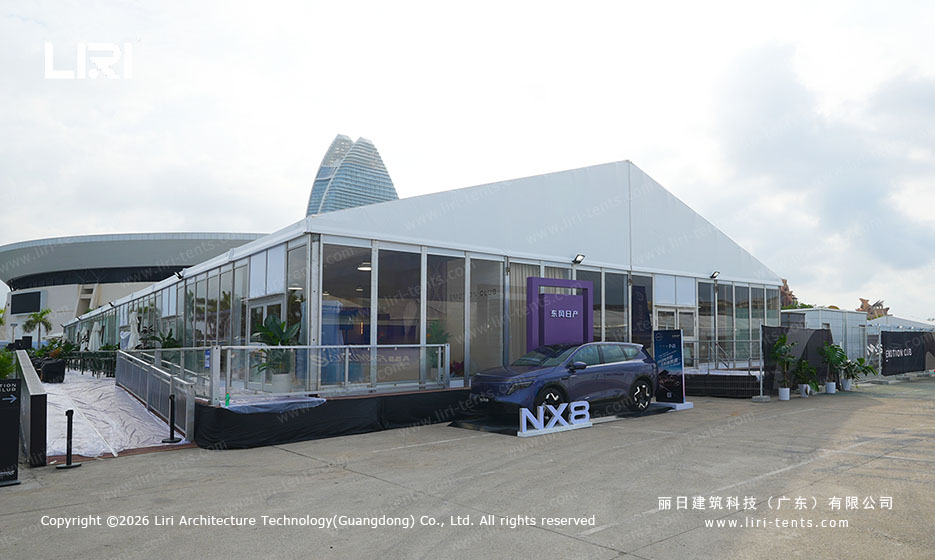
A car showroom event tent works like a pop-up showroom, with the vehicle lit from two sides and the crowd on a set path. Climate control matters once the tent holds 200 people and a row of screens.
Frequently Asked Questions
Do I need a permit for a product launch tent?
Most councils and venues ask for a structural certificate and a fire plan above a local span threshold, and a city pitch often needs road approval too. Confirm early, since the lead time can exceed the build itself.
How long does it take to set up a launch tent?
Setup follows crew size, ground and footprint, not a fixed clock. A single clear-span bay goes up in a day on a prepared slab, while a zoned launch with staging needs two to three days.
What does a product launch tent cost?
Cost tracks span, duration and branding, so a one-day launch and a tour build sit in different bands. Budget for structure, flooring, lighting and labour against a defined layout.
Can one tent hold the demo, the stage and the press area?
Yes, when the plan zones them instead of mixing. Clear-span bays place the hero unit, stage and press pen under one roof, with media kept on a line to film the reveal.