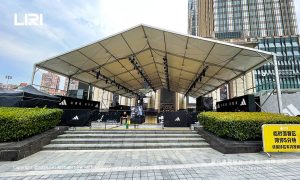
Most guides to event tents describe a single day. A trade show can run for three days, a food festival fills a weekend, and a sports meeting may last a week. The tent stays up the whole time.
That difference matters. Small problems have time to show up, and the same room has to be ready again each morning. This guide shows what you see inside it from the first morning to the last, and what to ask before you book.
No building knowledge is needed. Your dates and a rough programme are enough to start.
One tent, several days, not one long day
A tent used for three days is not simply a longer party. It is the same room, left standing and opened again each morning. Nothing is packed away at night and carried back at dawn. The floor, the walls, the lights and the doors stay where they were, and the exhibits inside them stay too.
That changes what matters. For one afternoon, most people care about shelter and enough room. Across several days, small things have time to show up.
A door that is slightly awkward becomes tiresome by the third morning. A floor that is hard to sweep becomes a daily problem. Weather has more than one chance to turn.
Most large events of this kind use a clear span tent. That is a framed hall with no poles in the middle, because the roof is held up by the walls around the edge. The open floor lets you put stands, tables or a stage wherever you like. Guides to outdoor exhibition structures explain how the frame sets the shape of that floor and how the sections join together.
Tell a supplier the number of days at the very start. It affects the floor you choose, the lighting, the number of doors, and how often someone needs to clean. A single Saturday and a four day show are not the same job, even when the guest count and the size of the tent match.
The first morning, before the doors open
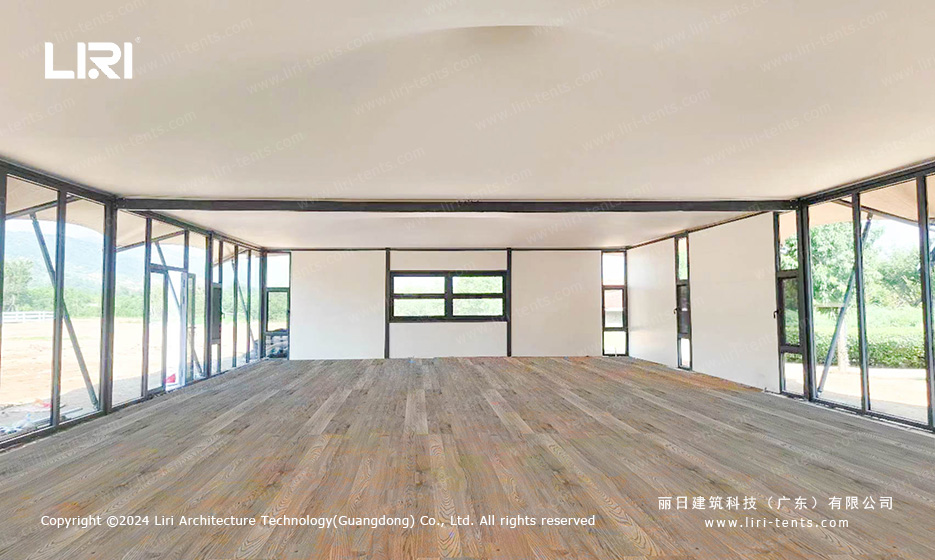
Walk in an hour before opening and the hall looks almost empty. The roof is bright, the floor is clean, and the air is still cool. A photograph taken at this hour is useful, because it shows the space before anyone has moved a chair or left a box in a walkway.
Empty does not mean unfinished. By then the stands are built, the signs are up, and the lamps have been tested. The quiet is simply the last calm hour of the day. Staff use it to walk the whole floor from one end to the other.
Look at how the space is divided. Low boards, rope barriers and a few tables can turn one large room into a route with a beginning and an end. In the picture, display panels stand in the middle of the floor with room to walk around them. Visitors later follow those gaps without being told to.
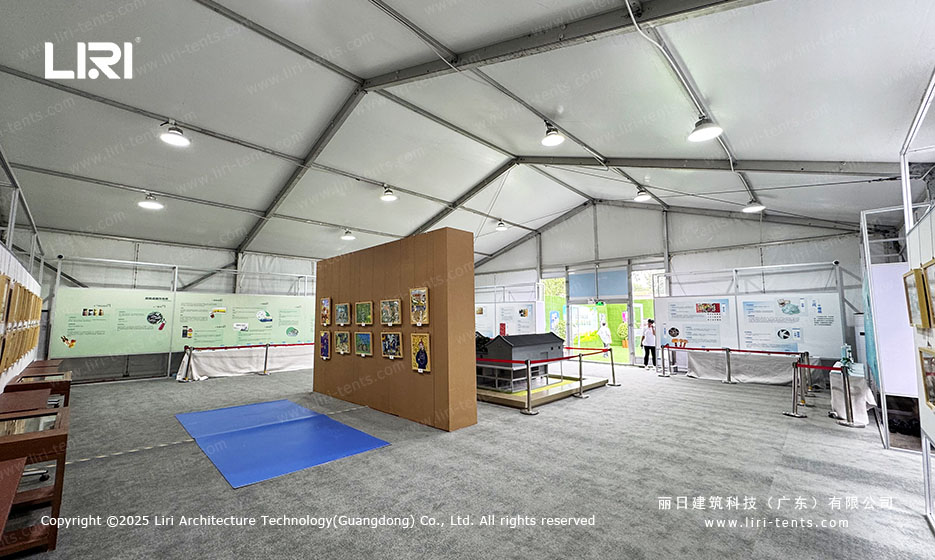
This is why the layout deserves a morning of thought rather than ten minutes. Our guide to how visitors move through a hall describes the paths people choose when they are given a choice. On an event that runs for days, a good layout has to work again on the second and third morning, not just on the first.
Take a few pictures while the hall is still empty. They give you something honest to compare against later in the week. A barrier that has drifted becomes easy to spot. So does a turned sign, or a pile of boxes near a door.
When the doors open, hour by hour
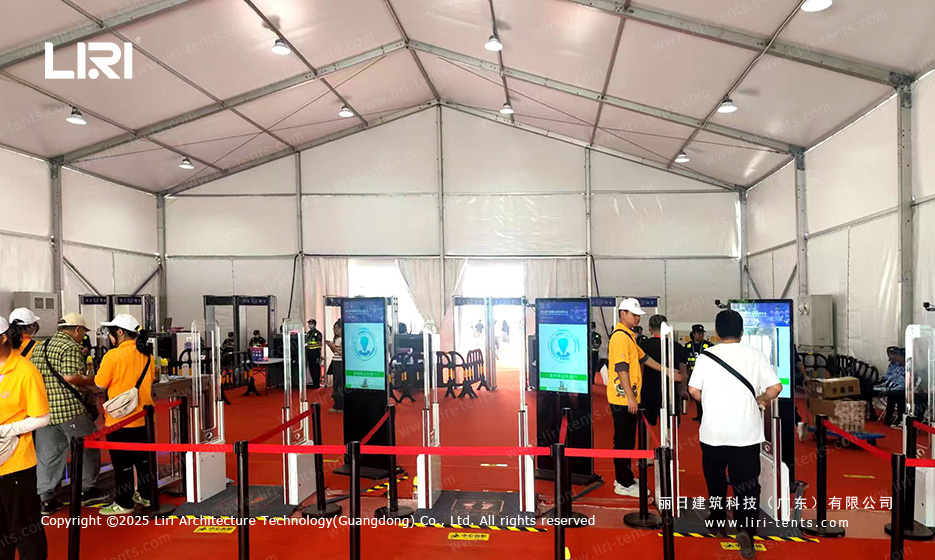
The first hour is the busiest. People arrive together, stop to read a sign, and look for the way in. A registration desk or a checkpoint near the entrance gives them a clear place to start. In the picture you can see the gates and low barriers that shape a short queue.
Once the hall fills, the room changes in ways a single afternoon never shows. Chairs drift out of line, a box appears beside a stand, and the noise rises. None of it is a fault. It is simply what a few hundred people do to a room over a long day.
Daylight and lamps change the same space too. A white roof spreads the morning light evenly, and by late afternoon the hanging lamps do most of the work. That is worth noticing on a long event, because returning visitors remember how the hall felt the day before. They will notice if it looks tired.
The practical answer is not more staff or more rules. It is a room that is easy to put back. Leave wide gaps between stands, keep one route clear to the exits, and choose a floor that can be swept quickly. Small decisions made on the first morning save time on every morning after it.
Think about the quiet corners as well. A corner that feels pleasant at ten in the morning can feel warm and still by three on a sunny day. If the tent has side panels that open, ask how they are handled during the day. Fresh air is part of the room, not an extra.
Overnight, and the next morning again
At the end of the day the tent is closed, but it is not gone. It stands on the site through the night with everything still inside. A row of lit tents is a familiar sight at a festival or a fair. The lights are often left on low for safety and for anyone working late.
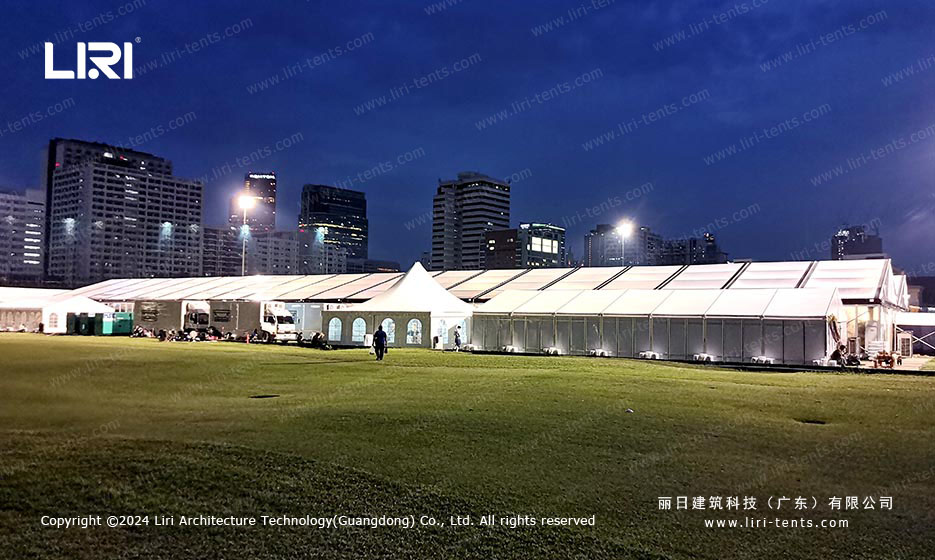
This is the part organisers most often forget to picture. Exhibits, tables and equipment stay where they are until morning. That is convenient, and it is why a short talk about locking the doors matters. Ask who holds the keys and how the entrances are checked, in ordinary words, before the first day begins.
Night brings small changes too. On grass, dew can leave the ground outside a door damp by morning. In a cool month, the air inside feels different at seven than it did at seven the evening before. A short walk around the hall before opening is enough to notice these things.
Weather deserves the same attention across several days. One wet afternoon can leave a damp patch near an entrance or a queue that forms under the wrong edge of the roof. Our guide to event tent entrances explains how the position of a door shapes those first steps inside.
By the second morning the hall should look like the photograph you took on the first. Floors swept, barriers back in place, signs straight. If it takes all morning to reach that point, something in the layout is working against you. That is useful to know while you can still change it.
Questions worth asking before you book
Start with the dates, not the size. Say how many days the tent must stand, when you can get onto the site to set up, and when it has to come down. A hall booked for a long weekend needs a different plan from one booked for a single evening, even if both hold the same number of people.
Ask about the floor in plain terms. Will it be swept every morning, and who will do it? Is it comfortable to stand on for a full day?
If rain is likely in that month, ask what happens at the entrance. These are ordinary questions, and clear answers are a good sign.
Ask about the doors, the lights and the walls after dark. How many entrances will be open each day, and which ones can be closed at night? Will the lamps be enough for an evening session?
Do the side panels open for fresh air on a warm afternoon? None of this needs technical language.
One more question helps more than people expect. Ask what the hall is like on the last morning, when the same team has opened it several times. A supplier who has done this before will talk about worn floor edges, tired signs and where queues form by day three. That answer tells you more than a list of sizes.
Finally, think about what happens when the event ends. The tent comes down, the site goes back to how it was, and any hired equipment leaves with it. A supplier who can describe that last day as clearly as the first one is easier to plan with.
A tent used for several days is a room that has to be ready again every morning. The frame and the roof do the quiet work. What changes is the floor, the air, the light and the way people move. Notice those on day one, and the days that follow are much easier to run.
If you have dates and a rough programme in mind, send us a photo of your site and your dates. A short description is enough for us to talk through the size, the floor and the doors with you.