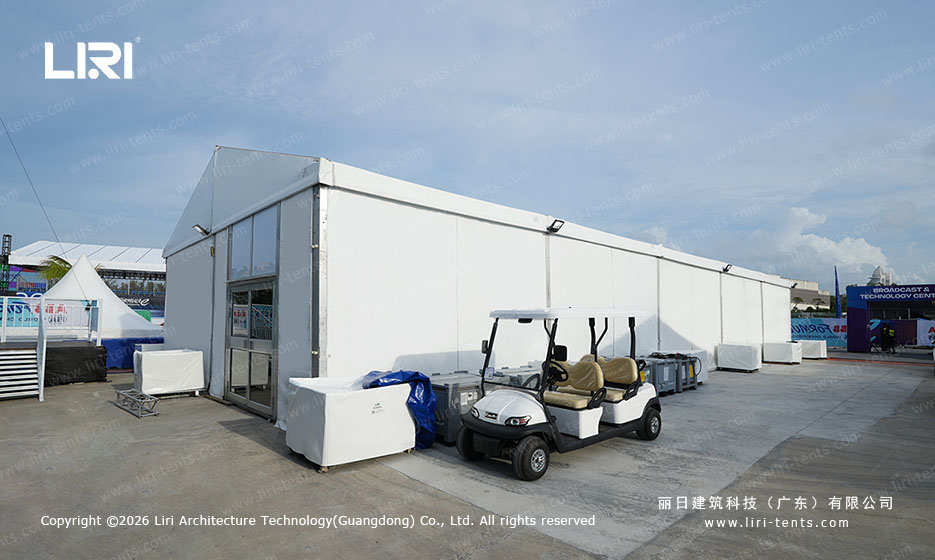
The Sanya street circuit sits on a tropical coastline where sea breeze meets a permanent 30°C-plus heat. For the ABB Formula E Sanya E-Prix, organizers needed paddock, hospitality, and brand-activation structures built around three constraints: salt-laden wind, sudden tropical downpours, and a 72-hour setup window. The deployment combined a 20m clear span pit, a VIP clear span event marquee, and a glazed pavilion for the NX8 launch.
1. The Build Brief
The paddock needed three working zones: a team pit (workshop plus crew rest), a VIP hospitality lounge for sponsors and media, and a partner-brand pavilion for the NX8 launch. Sanya sits inside typhoon-exposed Hainan, so the structures were rated for a working wind load roughly 30 percent higher than a temperate-city round.
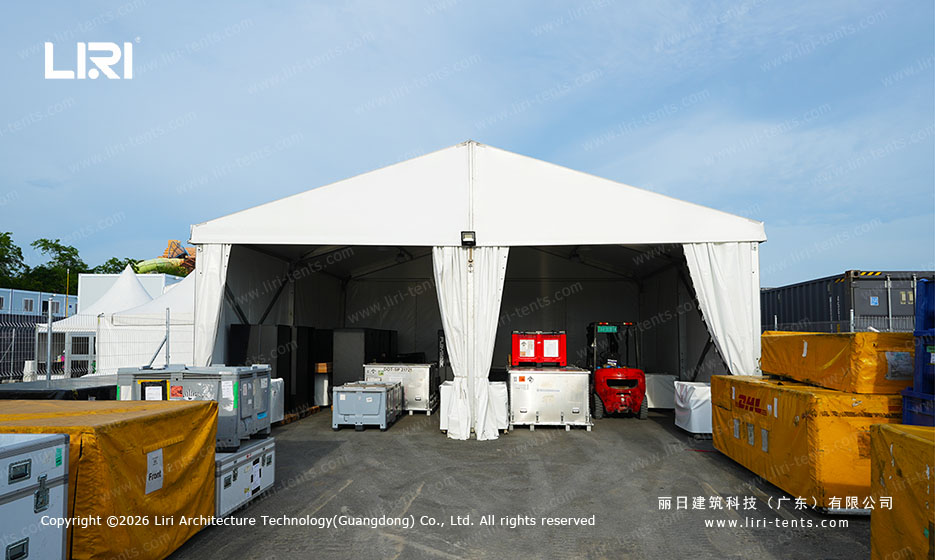
2. Pit Tent Engineering
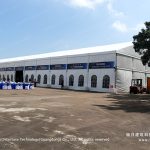
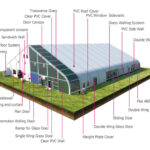
The pit tent is a 20m × 45m clear span with 75mm sandwich hard-wall panels and a translucent double-skin PVC roof. The 6061-T6 anodized aluminum frame uses a 4-channel main profile giving 12m of uninterrupted interior — long enough to park two Formula E cars nose-to-tail. Thermal management runs on ridge turbines, motorized gable-end louvers, and a continuous cable trough. Interior stays under 28°C with doors closed at midday.
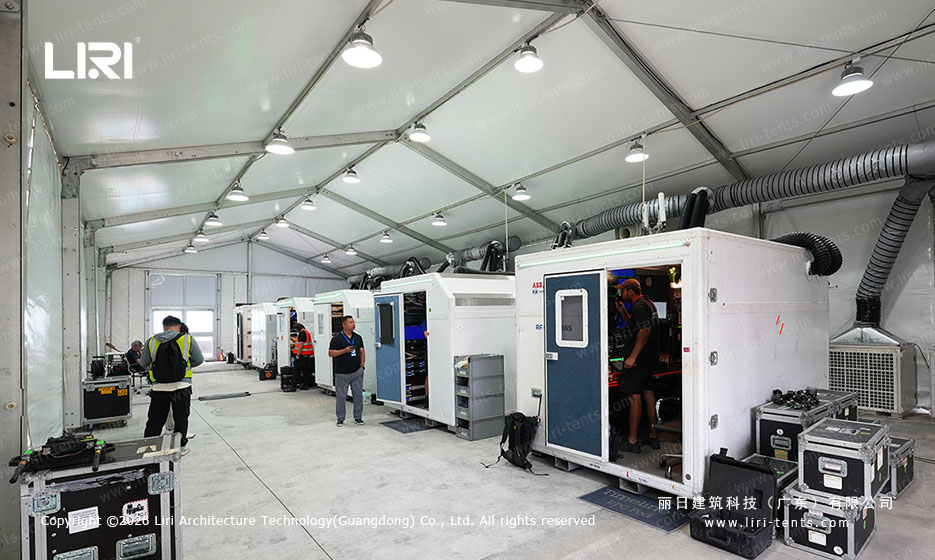
3. Workshop, Storage, Crew Rest
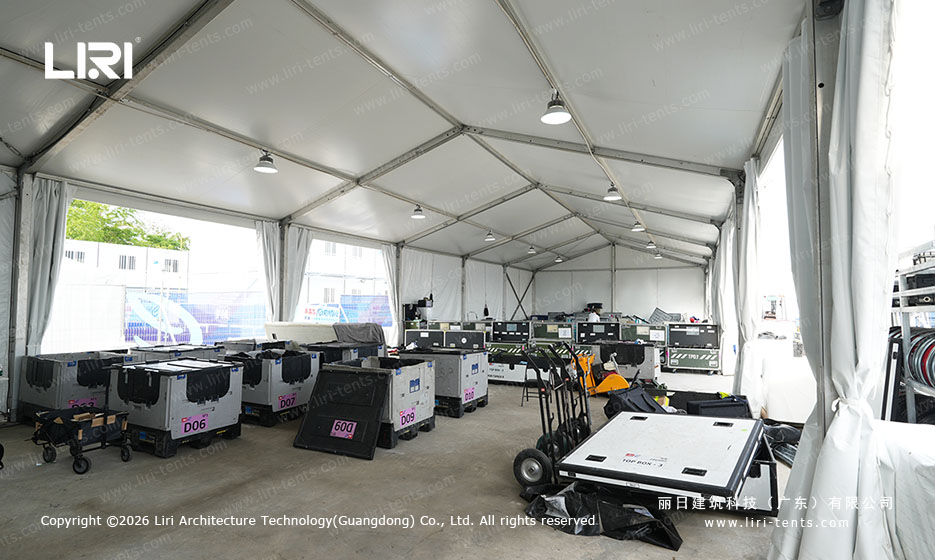
The 20×45 floor splits into a workshop lane, a storage lane, and a small rest corner. The workshop lane runs down the center with ESD-safe floor matting, 500-lux LED high-bay lighting, and 32A three-phase outlets every 6m. The storage lane holds the team’s numbered flight cases on the hard floor. This three-zone layout inside a single clear span is the practical answer to fitting a workshop, warehouse, and break room into 900 square meters, and works well for outdoor event tent deployments on a public waterfront.
4. VIP Hospitality Lounge
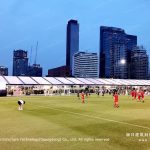
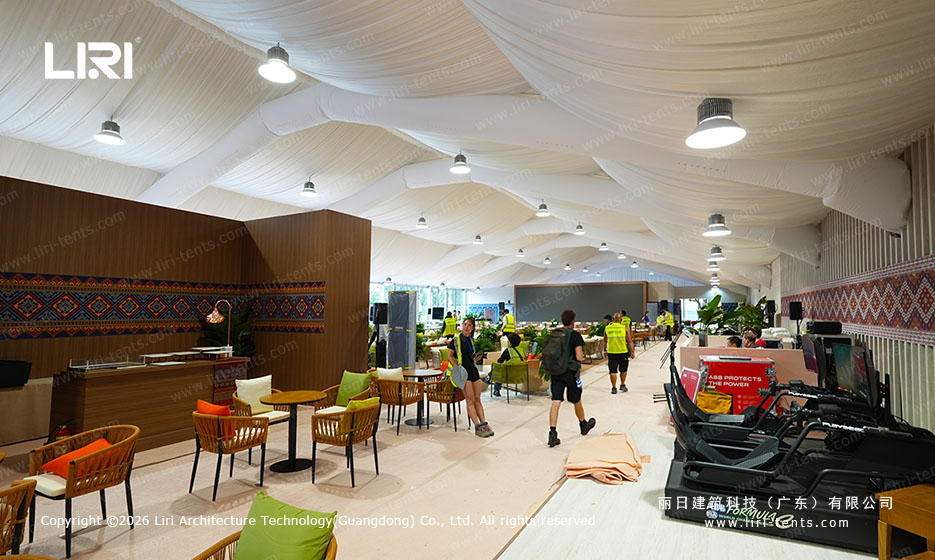
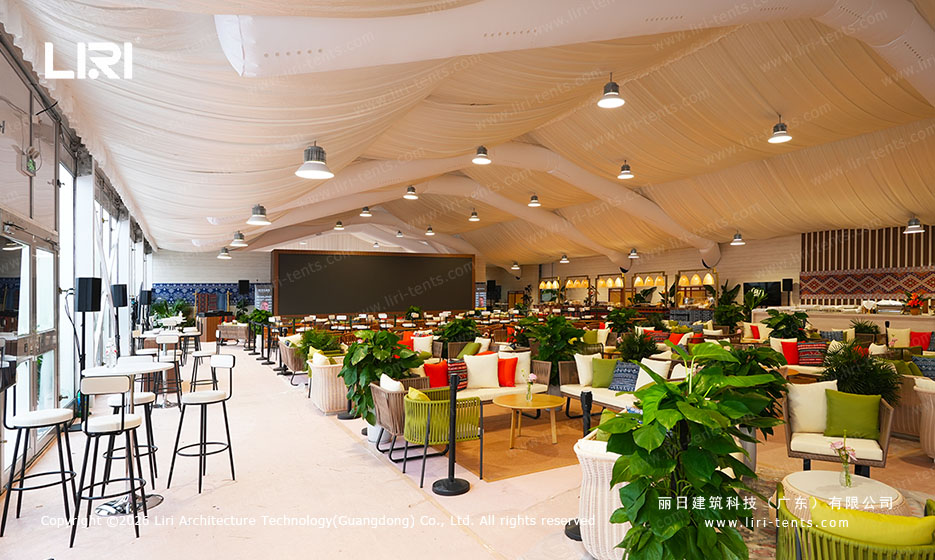
The hospitality tent is a 25m × 35m structure a short walk from the pit: porcelain tile on a raised sub-floor, white draped walls, and a soft pleated ceiling liner. Furniture splits into a coffee bar, a high-top cocktail area, a lounge cluster, and a small stage. Two monitor walls carry live timing and a sponsor reel, so the lounge is genuinely a working media room.
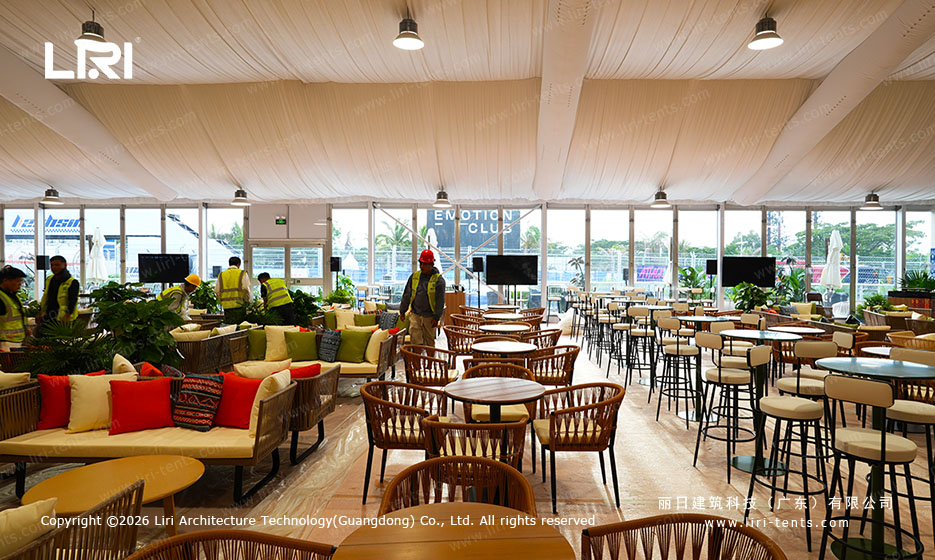
The hospitality block is where the tent choice gets judged. A lounge that creaks in the wind, leaks in a squall, or runs hot undermines the sponsor program. The Sanya brief was weighted toward a heavier envelope, even though it added half a day to the build.
5. NX8 Launch Pavilion
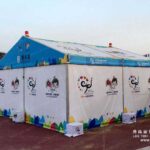
The partner-brand launch occupies a 15m × 30m fully glazed pavilion with tempered glass walls and a glass entrance door. The 6m clear height brings an SUV inside for a 360-degree camera loop. The NX8 sits on a low rotating plinth, framed by the harbor and the Sanya curve-roof tower. The glass walls pull foot traffic from outside and let photo teams shoot through the glass at a clean backdrop. A comparable coastal envelope is in our Glass Wall Event Tent for Alisa Hotel Ghana case study.
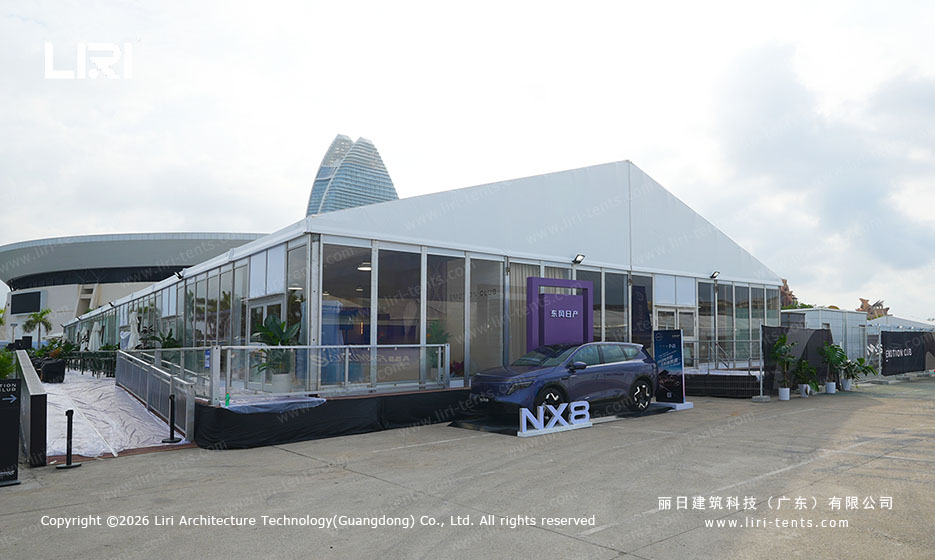
Brand-activation tents like this one are an increasingly common use of large event structure inventory at motorsport weekends, because the OEM wants the launch footprint inside the venue fence without waiting for a permanent building.
6. On-Site Performance
The deployment was handed over inside 60 hours: pit first for car prep, hospitality second for sponsor setup, brand pavilion last for launch rehearsal. Build crew was twelve on two shifts. Race week ran without a structural callout, despite two squalls and a 78 km/h peak gust. Strike took just under 30 hours, and total site footprint was 3,200 square meters — a useful planning number for a similar brand activation at a comparable street circuit. The comparable case is our Bangsaen Grand Prix VIP Hospitality deployment in Thailand.
7. Tent Specifications
| Item | Specification |
|---|---|
| Frame | 6061-T6 anodized aluminum, 4-channel profile |
| Roof | Double-skin 850 g/m² PVC, ridge turbines |
| Walls | 75mm sandwich (pit) / glass (brand) / drape (hospitality) |
| Wind load | 100 km/h working, 120 km/h peak |
| Temperature | −10°C to +50°C |
| Certs | ISO 9001, TUV, CE EN 13782 |
| Options | AC units, glass door, planting, branding wall |
8. Frequently Asked Questions
Q1. Can a clear span event tent handle a tropical typhoon warning at a street circuit?
Yes. The Sanya pit tent is rated for 100 km/h working and 120 km/h peak wind. In a squall, the team switches the side panels to storm position and adds ballast. In a real typhoon strike, the structure is struck ahead of landfall.
Q2. How long does it take to install a 20×45m clear span pit tent on a fresh venue?
A 20×45m hard-wall pit tent takes 28 to 32 hours with a crew of 10 to 12 on two shifts. The Sanya deployment was 60 hours across three tents.
Q3. Is a glass wall brand activation tent safe in a coastal wind environment?
Yes. The Sanya glass wall tent used 10mm tempered glass with structural silicone joints, rated for 120 km/h peak gust. Laminated glass is typically specified on the windward face.
Q4. What makes a large event tent work as a VIP hospitality lounge, not just a rain shelter?
A lounge-grade envelope needs a soft pleated liner, a raised sub-floor with porcelain tile, four-zone furniture, and integrated monitor walls, plus AC, planting, and a clean drapery scheme. The Sanya lounge used a 25×35m clear span.
Q5. Can a brand activation pavilion like the NX8 launch be redeployed at the next race?
Yes. The NX8 pavilion was struck and loaded for the next round in 12 hours. A typical 15×30m brand-activation pavilion reuses the same stock for 30 to 40 race weekends.
For a Sanya-scale deployment — pit, hospitality, and brand pavilion on a coastal street circuit — a single supplier keeps the build schedule, wind-load certification, and post-event strike on the same page. Browse our large tennis court arena tent range for the full clear span catalog.
Planning a post-11873?
Send the site details, required size and operating season for a tailored specification.