Choosing a clear span party tent for a celebration depends less on finding the largest available frame and more on matching the bay configuration to your specific guest count, layout requirements, and site conditions. A clear span structure provides unobstructed floor space because there are no interior support poles, which means dining tables, a dance floor, a stage, and service stations all fit exactly where the event layout requires them. This guide covers the key specifications and planning steps to evaluate before booking or purchasing a party tent.
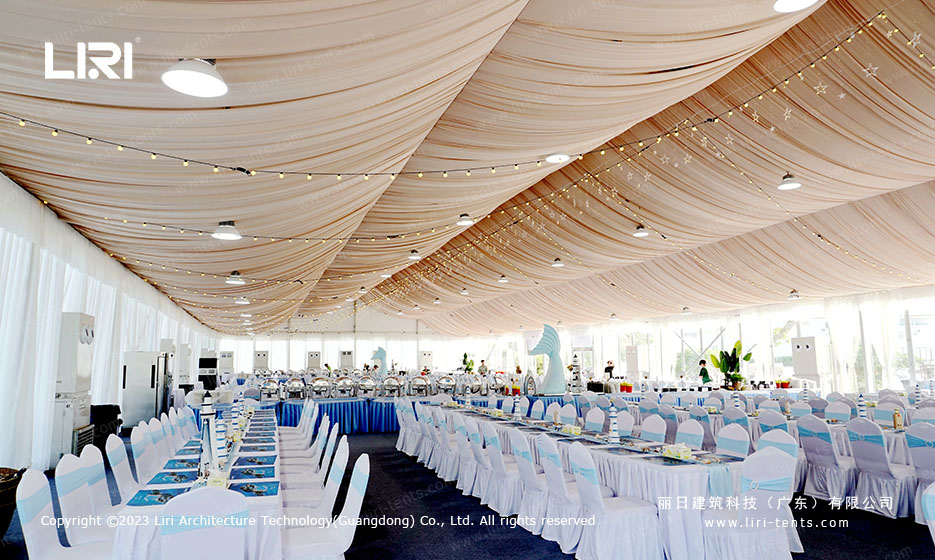
Clear Span Structure and Material Specifications
The frame is constructed from 6061-T6 aluminum alloy extrusions that bolt together without requiring interior vertical supports. This design means a 20 by 50 meter hall retains every square meter of floor space as usable area. The PVC roof membrane weighs 650 to 850 g/m² and carries DIN 4102 B1 flame certification, satisfying venue insurance requirements and local fire code inspections without supplemental chemical treatment.
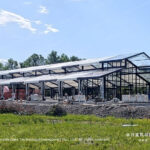
Sidewall panels are interchangeable between clear PVC sections that transmit natural daylight and solid PVC panels that provide privacy and thermal insulation. The same tent configuration can therefore function as an open, airy daytime garden marquee and convert to a fully enclosed evening reception space by swapping wall panels. Wind load tolerance reaches 80 to 100 km/h, and snow load capacity covers 0.3 to 0.5 kN/m², ensuring the structure performs across multiple seasons. The versatile clear span event tent demonstrates how these specifications apply across different event categories.
Size Planning by Guest Count and Layout
Event capacity planning follows a straightforward calculation. A seated dinner configuration requires approximately 1.5 square meters per guest. Adding a dance floor, buffet stations, and a stage increases the requirement to roughly 2.5 square meters per person. A 20 by 50 meter clear span tent accommodates approximately 400 guests for a seated dinner with adequate circulation space. For smaller guest lists, a 10 by 20 meter bay serves 120 guests at the same comfort level.
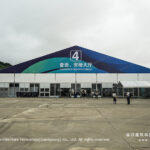
The modular bay system allows length adjustments in 5-meter increments, so the tent dimensions match the event size rather than requiring organizers to round up to a standard configuration. Eave height selection also affects the interior experience. A 4-meter eave clears lighting trusses, decorative banners, and hanging installations. A 6-meter eave accommodates taller centerpiece arrangements and stage backdrops for formal events. The 15-meter exhibition hall tent configuration uses the same modular sizing logic adapted for trade show applications.
Site Preparation and Installation Requirements
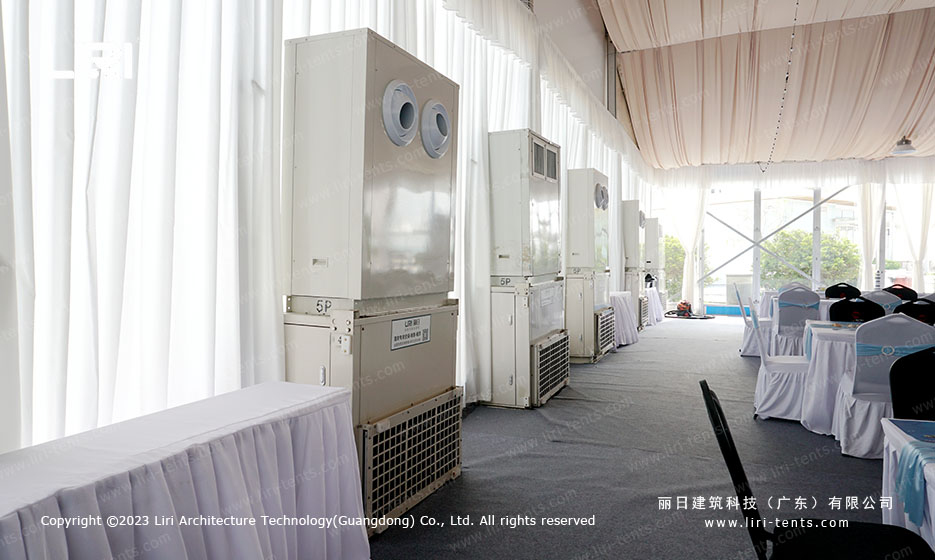
The clear span frame anchors to the ground using steel stakes on grass and soil surfaces or ballast weight plates on asphalt and concrete. No concrete footings or permanent site modifications are required. Power distribution runs through floor duct channels or overhead busbar systems attached to the frame, keeping all electrical cables away from walkways and guest areas. Generators and HVAC units remain outside the tent envelope and feed through the frame structure.
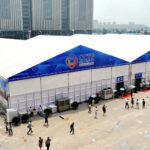
Installation timeline varies by tent size. A 20 by 50 meter configuration with flooring and wall panels requires one to two days for a standard crew. Smaller 10 by 20 meter bays can be operational within hours using the same tool set. The frame system is designed for repeated assembly and disassembly cycles, making it suitable for venue operators who host multiple events at different locations across a single season. The large outdoor exhibition tent setup illustrates similar site preparation and installation workflows for larger configurations.
How long does a party tent take to install?
A crew of four to six workers can install a 20 by 50 meter clear span party tent in one to two days depending on whether flooring and wall panels are included. Smaller bays can be erected in a few hours with the same crew and hand tools.
Can the tent be temperature controlled?
Yes. Insulated sidewall panels and HVAC units suspended from the frame maintain comfortable interior temperatures across a wide range of outdoor conditions. Insulated panels are recommended for events that run across multiple seasons or in climates with significant temperature variation.
Do I need a permit to install a party tent?
Most municipalities require a temporary structure permit for tents above a specific size threshold. The DIN 4102 B1 fire rating and certified wind load specifications provided above typically satisfy permit review requirements, but checking with the local building department before finalizing the event date is recommended.
What is the typical lead time for ordering a party tent?
Standard configurations with available stock can ship within two to three weeks. Custom sizes, interior lining packages, and glass wall systems typically require four to six weeks from order confirmation to delivery.
Can the same tent be used for different types of events?
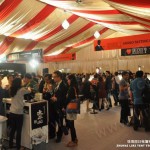
Yes. The modular panel system allows the same frame structure to serve weddings, corporate galas, community festivals, and trade shows by changing wall panel types and interior layout configurations between events. The event tent rental sizing guide shows how the same panel system converts between event types with minimal reconfiguration time.
Send the site details, required size and operating season for a tailored specification.